The cat's purr: a natural therapy with surprising benefits
A cat's purr is much more than a sign of calm: it involves a precise physiological mechanism with frequencies linked to bone regeneration. We explain what the evidence says about its real benefits.
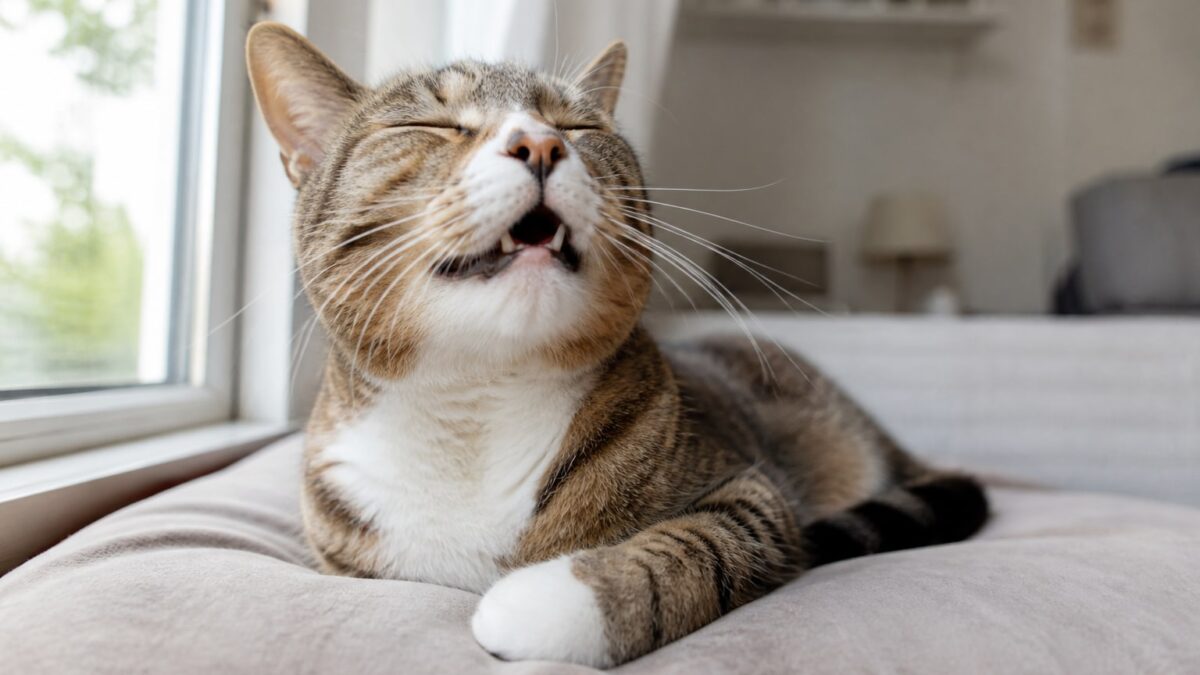
Your cat (Felis catus) purrs while sleeping beside you, when eating, or even when injured at the veterinary clinic. That deep, continuous sound is not just a sign of well-being. Since the 2000s, several studies have analysed its acoustic mechanism and raised something striking: the frequencies of purring coincide with ranges used in bone and muscle regeneration therapies in human medicine.
This is neither magic nor pseudoscience. It is applied physiology, backed by decades of research. Let us break down the mechanism step by step.
Why do cats purr?
Purring is not exclusive to happy moments. Cats purr when they are relaxed, yes, but also when they are in pain, giving birth, or dying. This has led several researchers to propose that the original function of purring is self-regulatory, not merely communicative.
The hypothesis with the most support is that purring acts as an energy-conservation mechanism: it produces a stimulus with possible healing effects without the metabolic cost of moving or hunting.
The physiological mechanism: laryngeal contraction and frequency
Purring is generated by the rapid contraction and relaxation of the laryngeal muscles, at a rate of between 25 and 150 cycles per second (Hz). These contractions cause the glottis to open and close intermittently during inhalation and exhalation, producing the characteristic sound.
Unlike meowing, purring does not depend on continuous conscious decision: once the neural pattern has started, the laryngeal muscle oscillates almost automatically. The researcher who has studied this frequency most is the bioacoustician Elizabeth von Muggenthaler, whose 2001 work published in The Journal of the Acoustical Society of America documented that the dominant purring frequencies in several felids cluster in bands of 25, 50 and 100 Hz, precisely the ranges that orthopaedic literature associates with stimulation of bone density.
To put the data in context, this table summarises the documented frequencies and their relation to therapeutic uses described in physical medicine studies:
| Frequency (Hz) | Effect documented in physical therapy studies | Relation to purring |
|---|---|---|
| 20-50 Hz | Stimulation of bone consolidation | Usual range in domestic cats at rest |
| 50 Hz | Improvement of joint mobility in vibration therapies | Frequent frequency in low-intensity purring |
| 100 Hz | Reduction of inflammation in soft tissues in studies with therapeutic vibration | Detected in higher-intensity purring |
| 100-150 Hz | Upper range recorded in large and domestic felids | Varies by species and individual |
Benefits of purring for feline health
The cat itself seems to benefit from purring in situations of stress or convalescence. It has been observed that hospitalised cats or cats with fractures purr more often, which supports the idea of a mechanism of physiological self-regulation rather than mere emotional expression.
This never replaces veterinary care. If your cat purrs unusually, stops eating, or shows signs of pain, always consult your veterinarian.
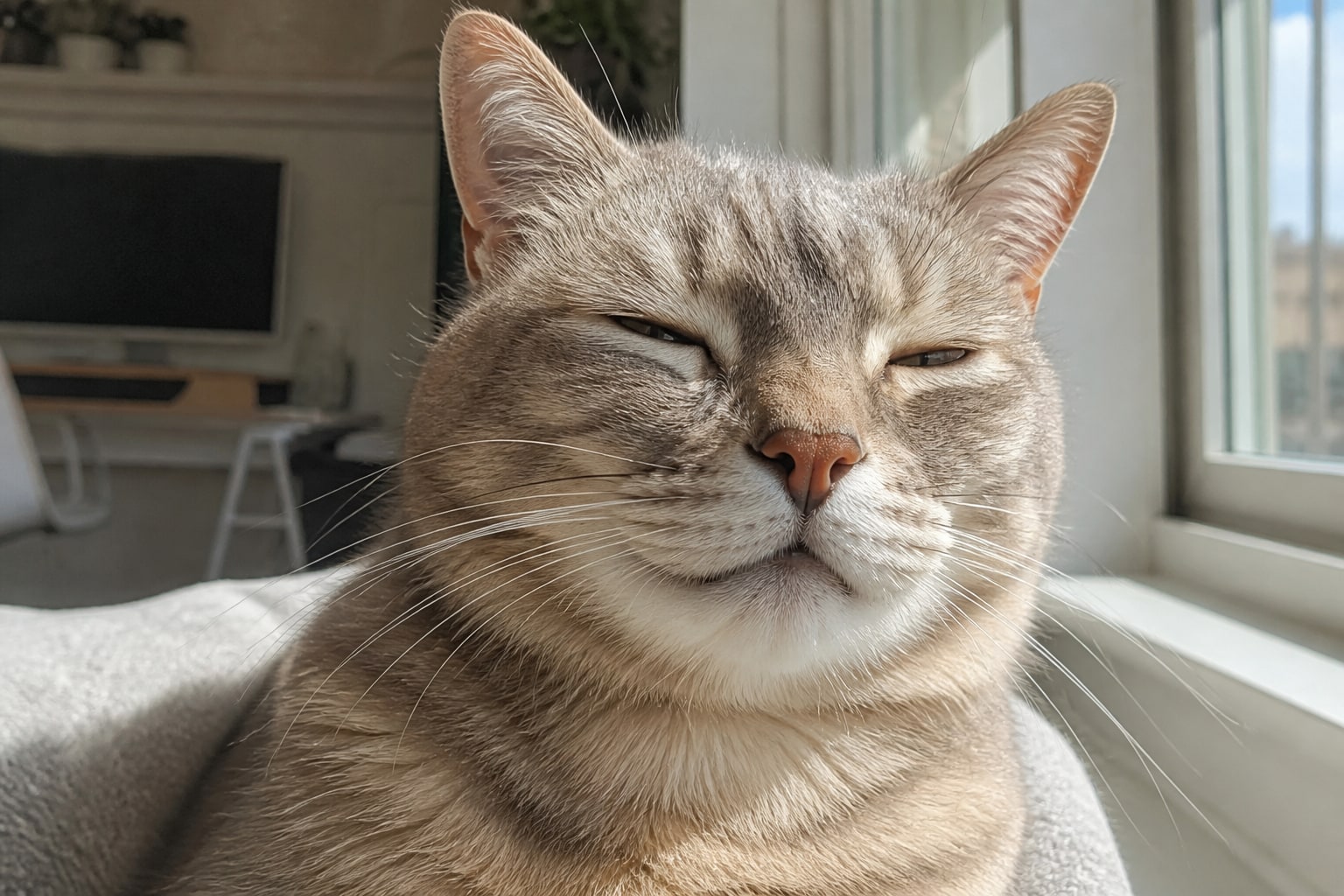
Purr therapy: bone healing, cortisol and blood pressure
Beyond the animal itself, several studies have analysed the effect of purring on people who live with cats. Research from the University of Minnesota (Qureshi et al., 2009, Journal of Vascular and Interventional Neurology) found an association between owning a cat and a lower risk of death from cardiovascular disease over a follow-up of more than ten years, although the authors themselves note that this is a correlation, not proof of direct causation.
Other studies have observed reductions in cortisol (the stress-associated hormone) and blood pressure after brief sessions of contact with purring cats, compared with control groups without exposure to the animal. These results are consistent, but these studies usually have limited sample sizes, so they should be read as promising evidence, not as an established medical treatment.
Do they only purr when they are content?
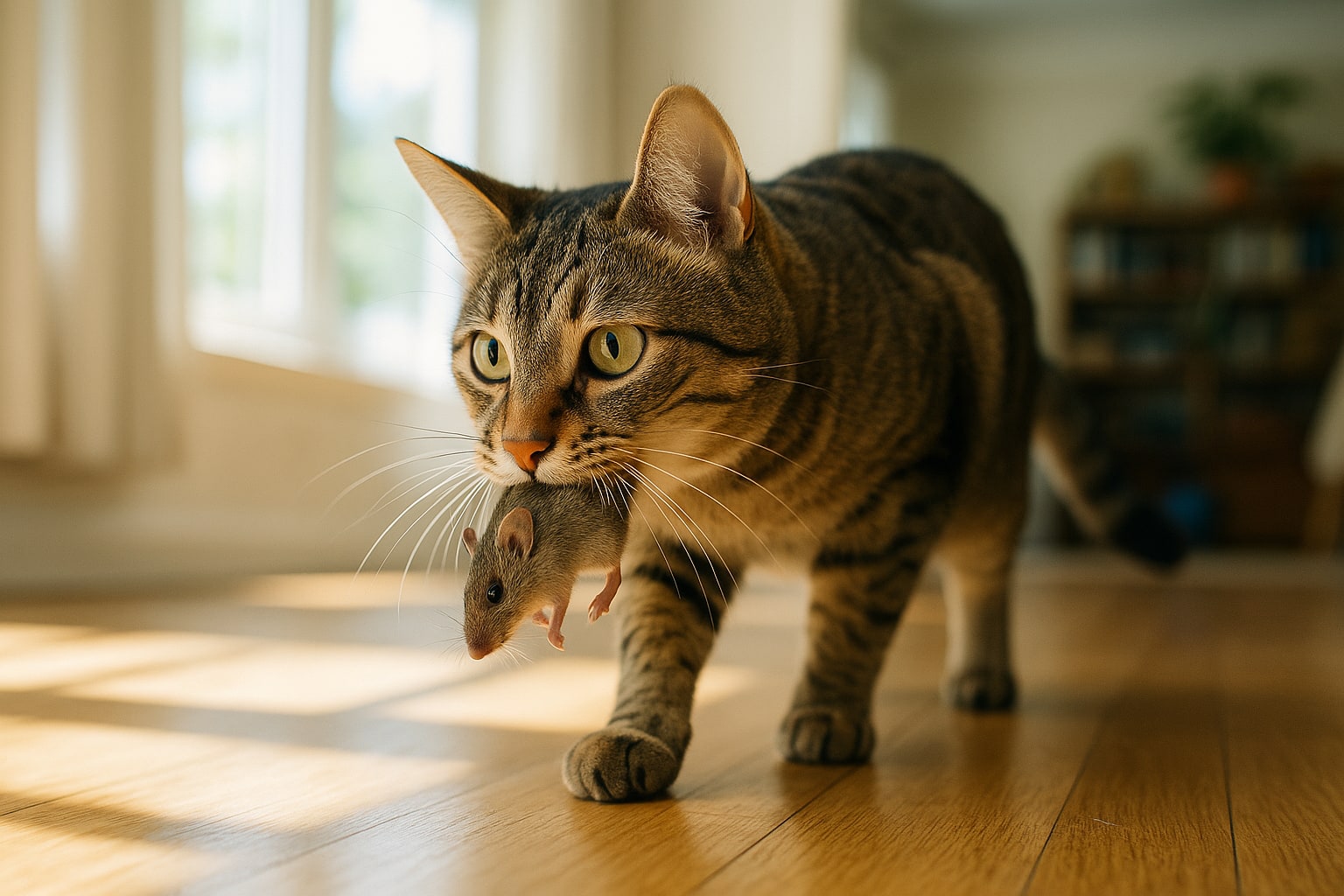
No. This is one of the most widespread myths. Purring also occurs in states of pain, fear or dying. That is why veterinarians do not use it as the sole indicator of well-being: it is always assessed together with body posture, appetite and general behaviour, as explained in detail in why your cat brings you unappealing ‘gifts’, another frequently misunderstood feline behaviour.
Verifiable curiosities
- Domestic cats and some small felids can purr both when inhaling and when exhaling, almost continuously.
- The large felines of the genus Panthera (lion, tiger) do not purr: they have a different hyoid bone that allows them to roar, but not to sustain continuous purring.
- Kittens start purring a few days after birth, even before opening their eyes, probably as a signal to the mother during nursing.
- Purring has also been documented in social situations between cats living together, which is relevant if you are considering introducing a new cat into the home without conflict.
FAQ
Why do cats purr when they are sick? Because purring seems to serve a function of physiological self-regulation, not only an emotional one. It has been observed in cats with fractures or in the terminal phase, which suggests a possible mechanism of relief or recovery.
At what frequency does a cat purr? Between 25 and 150 Hz, according to von Muggenthaler’s reference study (2001). This band coincides with frequencies used in human physical therapies to stimulate bone consolidation.
Does purring heal broken bones in humans? There is no evidence that a cat’s purr heals fractures in people. The relationship is a coincidence of frequencies with documented vibration therapies, not a proven medical treatment.
Does purring really reduce stress? Observational studies show reductions in cortisol and blood pressure after contact with purring cats, but these are associations, not conclusive clinical trials.
Do all cats purr the same way? No. Intensity and frequency vary according to the species, size and individual state of the animal, as seen when comparing domestic felids with smaller wild species.


0 comments · Comment