Land tortoises: basic care for decades of happy life
A practical guide to caring for land tortoises with real data: diet, habitat, UVB, hibernation and common mistakes. Everything you need before living with an animal that can exceed 60 years of age.
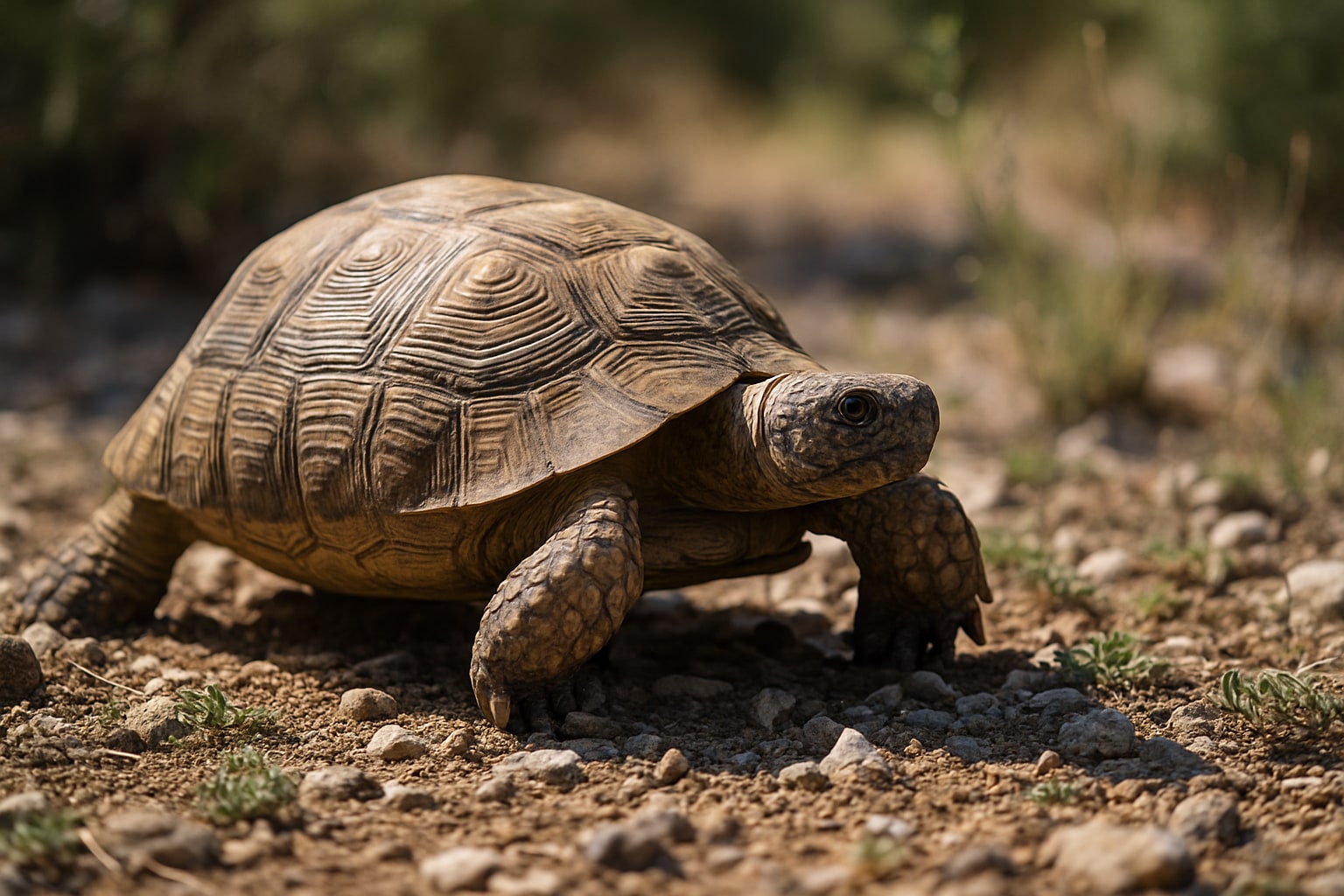
Land tortoises are not seasonal pets.
Well cared for, they can keep you company for five or six decades, and in some cases live beyond 80 years. Before bringing one home, it is important to understand that we are dealing with a wild reptile, with very specific thermal, lighting and dietary needs, and with strict legislation behind it.
In Spain, the most common species are the Mediterranean tortoise (Testudo hermanni) and the Spur-thighed tortoise (Testudo graeca), both protected and listed as Vulnerable (VU) by the IUCN. They are included in Appendix II of CITES, so keeping them requires official documentation (yellow CITES) proving their legal origin. Buying a tortoise without papers is not only illegal: it fuels the trade that has decimated their wild populations.
Most common species and legal aspects
Besides the two mentioned above, legal shops and breeders will offer the Russian tortoise (Testudo horsfieldii) and, less frequently, the Marginated tortoise (Testudo marginata). All of them require CITES and registration in your autonomous community as an exotic companion animal. Changing owners requires transferring that documentation.
Never release a tortoise into the countryside. Besides being an environmental crime, it can transmit pathogens to wild populations or hybridise with them.
Diet: a tortoise is not a rabbit
The most common mistake is feeding them lettuce, tomato and fruit. The natural diet of a Mediterranean land tortoise is 90% herbaceous and fibrous, with very little fruit and practically no animal protein.
What they should eat every day:
- Dandelion, chicory, endive, escarole, mulberry leaves, plantain, mallow, clover, fresh alfalfa.
- Edible flowers: hibiscus, calendula, rose, pansy.
- Spineless cactus (Opuntia), highly recommended in summer.
What to avoid or restrict:
- Iceberg lettuce, spinach, chard (oxalates that block calcium).
- Fruit: at most once a week, in symbolic amounts.
- Bread, pasta, dairy, dog or cat food. They cause kidney and liver damage.
- Animal protein: causes accelerated growth and shell deformities.
Offer a calcium supplement (powdered calcium carbonate) sprinkled over food 2-3 times a week, and a whole cuttlebone always available for them to gnaw. Water must be fresh and changed daily in a shallow container the tortoise can climb into.
Habitat: why a closed terrarium is a problem
An adult tortoise needs outdoor space. An enclosure in a garden or terrace of at least 4-5 m² per animal, with sunny and shady areas, soil and grass substrate, hiding places, and fencing buried 20-30 cm deep to prevent escapes.
The small glass terrariums sold as “tortoise kits” are unsuitable. At most they serve for the first weeks of a hatchling or as a controlled winter shelter.
Key parameters:
- Warm zone (basking): 30-35 °C under the lamp.
- Cool zone: 20-25 °C.
- Night: do not drop below 15-18 °C outside the hibernation period.
- Humidity: 50-70% depending on species (the Russian tortoise tolerates drier conditions, the Mediterranean prefers somewhat more).
- UVB: a 10-12% tube on for 10-12 hours a day if they do not receive direct sunlight. Replace every 6-12 months even if it still lights up.
Without adequate UVB, the tortoise cannot synthesise vitamin D3 and develops metabolic bone disease, with a soft, deformed shell. It is irreversible.
Hibernation: neither mandatory nor improvised
Mediterranean Testudo and Russian tortoises hibernate naturally between November and March. Doing it properly improves their reproductive health and longevity; doing it badly kills them.
Minimum requirements before hibernating:
- Healthy animal, with adequate weight (approximate Jackson formula) and a prior veterinary check-up.
- Fasting for 2-3 weeks to empty the digestive tract.
- Stable temperature between 4 and 8 °C. Neither freezer nor radiator.
- Box with dry substrate (soil, leaves), in a dark, ventilated place.
- Weekly weight check: maximum loss of 1% per month.
The safest option today is a dedicated fridge, with a digital thermometer and daily opening to renew the air. The romantic image of the garage or storage room is a common source of deaths from frost or early awakenings.
If it is your first year, consult a reptile veterinary specialist before deciding.
Common diseases and warning signs
See a veterinarian if you notice:
- Closed or swollen eyes, nasal discharge, mouth-breathing: possible respiratory infection.
- Soft shell, deformed legs: metabolic bone disease.
- Persistent diarrhoea, lethargy, refusal to eat outside hibernation.
- Raised shell scutes or foul smell: shell rot (SCUD).
Self-medicating with human antibiotics or antiparasitics is dangerous. Only an exotic animal veterinarian can prescribe treatment.
How long a land tortoise lives
With correct care, a Testudo hermanni usually lives 50-80 years, and there are documented specimens exceeding a century. It is a lifelong commitment, literally: many outlive their owners. Think about who will take charge if you cannot.
Frequently asked questions
Can I have a land tortoise without papers? No. All Testudo require CITES. Without documentation you risk penalties and the animal may be seized.
Can it live alone or does it need a partner? It lives perfectly well alone. Housing males together usually leads to fights, and a male constantly harasses a female. If they cohabit, it is better to have groups with more females than males and plenty of space.
Is it normal for it not to eat in winter? Yes, if your species hibernates and temperatures have dropped. Outside that context, loss of appetite warrants a veterinary consultation.
Can I give it commercial tortoise pellets? As an occasional supplement yes, as a staple no. Fresh plant fibre is irreplaceable.
Can they be bathed? Yes. A bath in lukewarm water (28-30 °C) up to the plastron, for 15-20 minutes, once or twice a week for hatchlings and weekly for adults, helps hydration and intestinal transit.