Hedera helix: ivy, a versatile climber for indoors and outdoors
Ivy (Hedera helix) is a perennial climber that is easy to care for both in pots and in the garden, but it is toxic to cats and dogs. We cover light, watering, pruning, propagation and varieties.
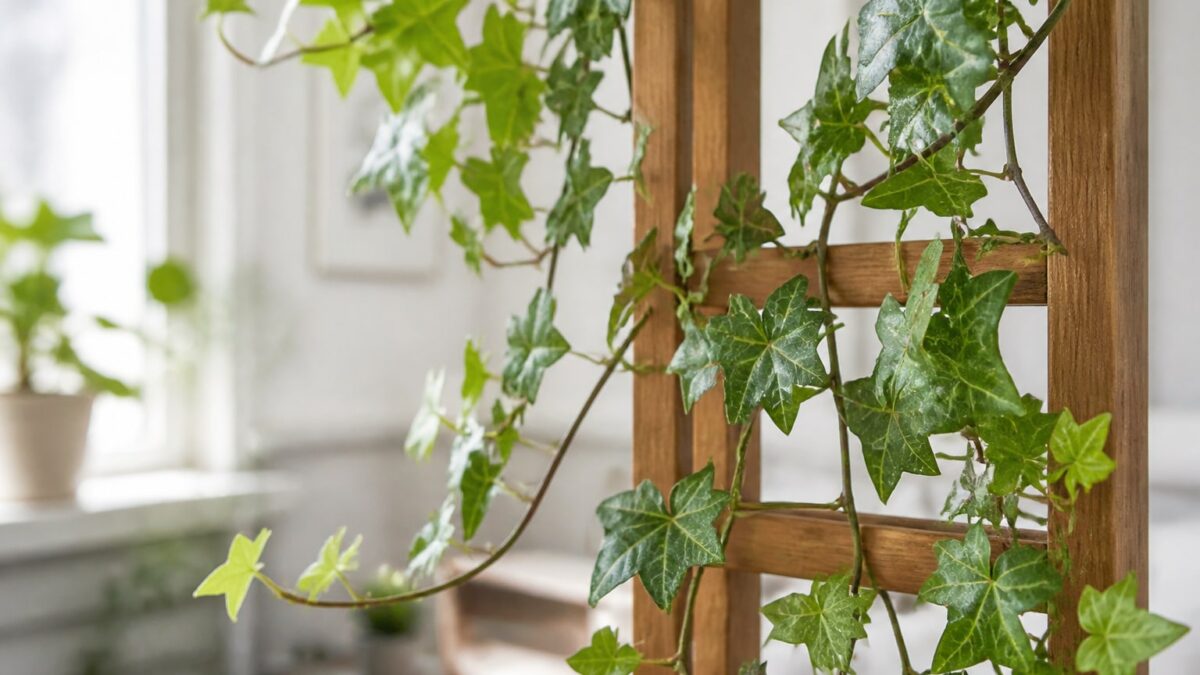
Ivy is one of those plants that almost nobody planted on purpose and yet ends up being part of the landscape of any patio, wall or balcony. Its scientific name is Hedera helix and it belongs to the Araliaceae family. It is native to Europe and western Asia, and has been cultivated for centuries both as an indoor ornamental plant and as a groundcover or living carpet outdoors.
What makes it so popular is its ability to adapt to low-light spaces, its vigorous growth and its evergreen foliage, which does not lose its leaves in winter. But it also requires some attention: it can become invasive if not controlled, and it is toxic to dogs and cats. Let’s go step by step.
Identification: what ivy (Hedera helix) is
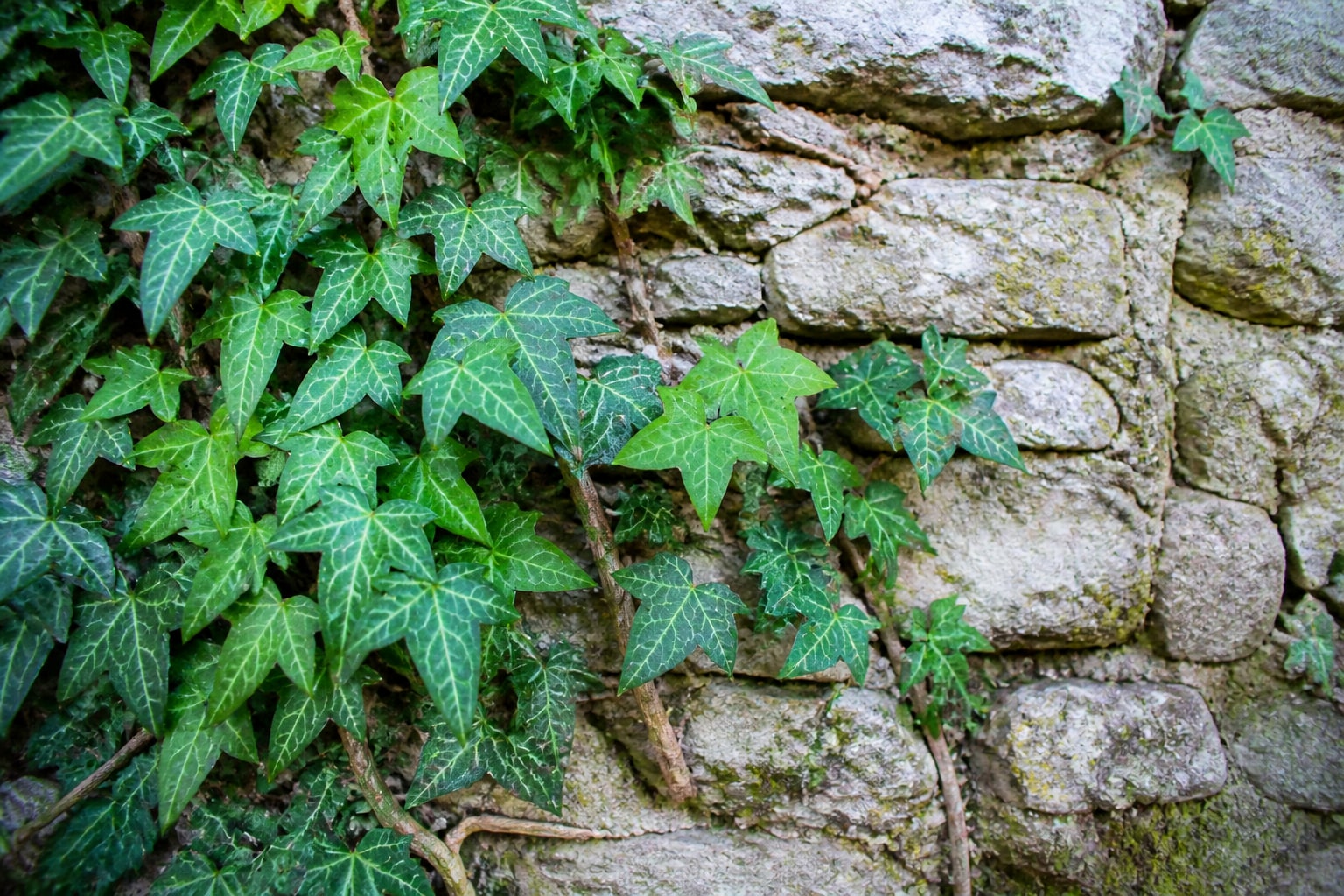
Ivy is a perennial woody climber that clings to surfaces using adhesive aerial roots rather than tendrils. This allows it to climb walls, trunks and fences without the need for a support stake.
It has two clearly differentiated leaf types depending on the growth stage:
- Juvenile leaf: lobed, with 3-5 lobes; this is the one we see on most pot or wall specimens.
- Adult leaf: oval and unlobed, appearing only when the plant reaches the reproductive (arborescent) stage.
In autumn it flowers with small greenish-yellow umbels, an important late source of nectar for bees and other pollinators when almost nothing else is blooming. It then produces black berries that some birds eat, but which are toxic to people and pets.
| Fact | Value |
|---|---|
| Scientific name | Hedera helix |
| Family | Araliaceae |
| Origin | Europe and western Asia |
| Plant type | Perennial woody climber/creeper |
| Maximum height (on support) | Up to 20-30 m under optimal conditions |
| Flowering | September-November |
| Hardiness | Withstands down to approx. -15 °C (USDA zones 4-9) |
| Toxicity | Toxic to dogs, cats and horses |
Light, water and substrate
Ivy tolerates everything from dense shade to partial sun, although variegated varieties (with white or yellow leaves) need more light to keep their colour.
As for watering, let the first 2-3 cm of substrate dry out between waterings. Indoors, watering every 7-10 days is usually enough; outdoors and in summer, it may need watering twice a week if it does not rain. Overwatering is its main enemy: waterlogged roots almost certainly mean yellow leaves.
It prefers a well-drained substrate rich in organic matter, with a pH between 6.0 and 7.5. A mix of universal potting soil with 20-30% perlite works well both in pots and for planting in the garden.
Indoor ivy vs outdoor ivy
Although it is the same species, care changes depending on where you keep it.
Potted care
Indoors, ivy appreciates temperatures of 15-24 °C and tolerates the dry air of homes well, although an occasional misting helps prevent red spider mite attacks. Place it near a window with indirect light; in very dark corners it will grow, but more weakly and leggy.
Wall and outdoor ivy
As an outdoor climbing ivy, it is commonly used to cover walls, fences or pergolas. Keep in mind that its aerial roots can damage the render of old façades or work their way between loose bricks. In gardens, it is widely used as a groundcover under trees where grass will not grow, although its spread should be clearly controlled: in some regions of North America and Oceania it is considered an invasive species because of its ability to escape cultivation and displace native vegetation.
Seasonal care
In spring and summer, ivy enters active growth: this is the time to prune, repot and fertilise every 3-4 weeks with a balanced fertiliser diluted to half strength.
In autumn and winter, reduce watering and stop fertilising. Outdoors, it withstands moderate frosts without protection; in very cold areas, a layer of mulch at the base helps protect the roots.
Pruning ivy
Ivy can be pruned at almost any time of year, but it is most effective in late winter or early spring, before new growth. Cut back stems invading unwanted areas and remove dead or damaged branches. On wall plants, annual pruning prevents the weight of the foliage from damaging gutters or roof tiles.
Propagating ivy from cuttings
Propagating ivy from cuttings is simple and is the usual way to multiply it, just as with other easy-to-reproduce houseplants, as we explain in this guide to propagating Echeveria elegans:
- Cut a 10-15 cm stem with at least 2-3 nodes.
- Remove the lower leaves.
- Place it in water or directly in moist substrate.
- Visible roots should appear within 2-4 weeks.
- Transplant to its permanent pot when the roots measure about 3-5 cm.
Ivy varieties
There are dozens of cultivars of Hedera helix, but these are some of the most sought after:
| Variety | Leaf | Recommended use |
|---|---|---|
| 'Glacier' | Grey-green variegated with white edges | Indoors, low direct light |
| 'Goldchild' | Green with yellow edge | Indoors with good light |
| 'Needlepoint' | Narrow lobes, fine appearance | Decorative in pots |
| 'Ivalace' | Curled edges, glossy dark green | Indoors, compact style |
| 'Buttercup' | Golden yellow in full sun | Sunny outdoors |
Common problems
The most frequent mistakes when caring for ivy are:
- Yellow leaves: almost always overwatering or insufficient drainage.
- Brown tips: air that is too dry or irregular watering.
- Weak, leggy growth: lack of light.
- Red spider mite: appears mainly indoors with heating and low humidity; check the underside of the leaves.
- Mealybugs: white spots on stems and veins, common when the plant is stressed.
Is ivy toxic to pets?
Yes. Ivy contains saponins (such as hederagenin) and falcarinol, compounds that can cause vomiting, diarrhoea, excessive drooling and, on contact with the skin, dermatitis. It is toxic to dogs, cats and even horses if ingested in quantity.
If you suspect your pet has chewed or swallowed ivy leaves or berries, contact your vet immediately; do not try to treat it at home. If you live with curious cats, you may also want to read about how to introduce a new cat into the home without conflict to better manage their access to houseplants.
FAQ
How long does ivy take to grow? Under favourable conditions it can grow 20-30 cm per month during spring and summer. In a pot, growth is slower than when climbing a wall or tree.
Does ivy need a lot of light? No. It tolerates dense shade, although it grows more compact and with better colour in bright indirect light. Variegated varieties do need more light to maintain their colour pattern.
Is ivy toxic to cats and dogs? Yes, it contains saponins and falcarinol that can cause digestive irritation and contact dermatitis. Keep the plant out of reach of curious pets and consult your vet after any ingestion.
Can I keep ivy in a pot indoors? Yes, it is one of the most tolerant houseplants. It needs moderate watering, indirect light and a well-drained substrate.
Is ivy invasive? In its native European range it is not a problem, but in regions such as the northwestern United States or parts of Australia it is classified as an invasive species. Before planting it outdoors, it is advisable to check local regulations.

0 comments · Comment