Kalanchoe blossfeldiana: intense blooms indoors all winter
Practical guide to caring for Kalanchoe blossfeldiana at home: light, watering, temperature and the photoperiod trick that makes it bloom in the middle of winter.
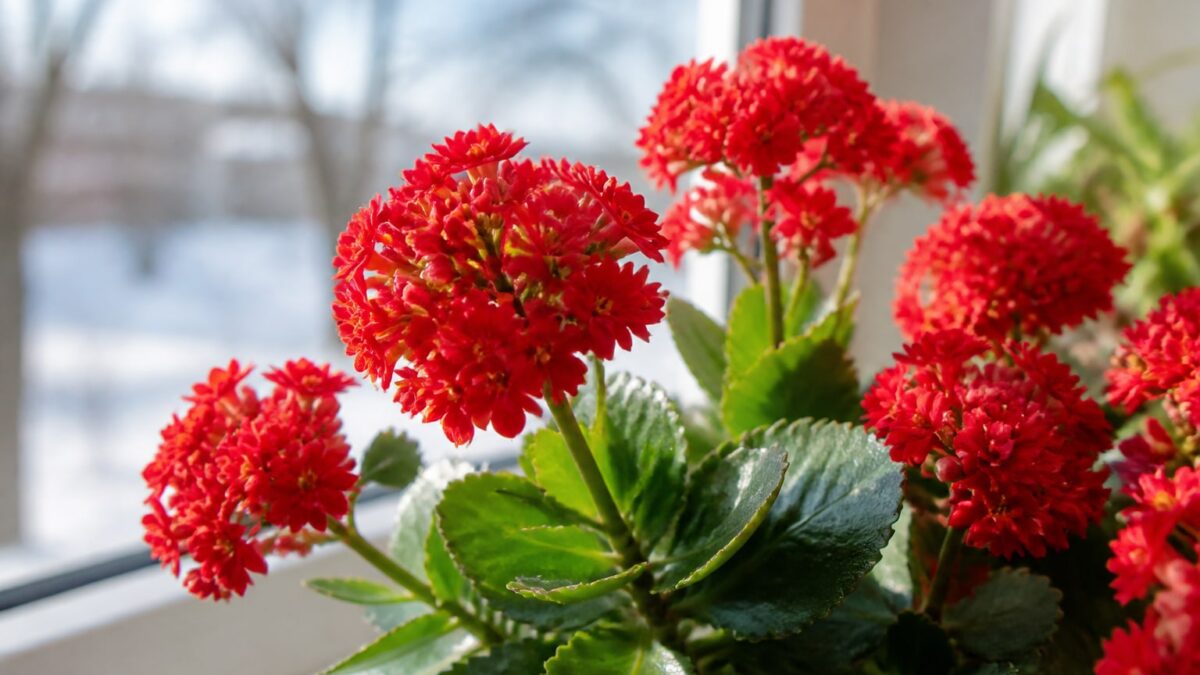
The Kalanchoe blossfeldiana is one of those plants you buy at the supermarket for 4 euros, covered in tiny, vibrant flowers, and end up keeping for years. It is a succulent native to Madagascar, built to withstand drought and intense light, yet indoors it responds surprisingly well once you understand two or three basic things.
What makes it special is not only its red, orange, yellow or pink flowers in compact umbels. It is its ability to bloom in the middle of winter, when almost nothing else flowers in the living room. To achieve this you need to respect its internal clock: the Kalanchoe is a short-day plant, and that is where most of the questions people have about it come from.
Quick facts about the Kalanchoe blossfeldiana
| Detail | Value |
|---|---|
| Scientific name | Kalanchoe blossfeldiana |
| Family | Crassulaceae |
| Origin | Madagascar |
| Adult height | 20-45 cm |
| Light | Very bright, with some gentle direct sun |
| Ideal temperature | 15-21 °C |
| Watering | When the substrate is dry (every 10-15 days in winter) |
| Flowering | Autumn-winter, induced by short days |
| Toxicity | Yes, for dogs and cats |
Light: bright and abundant
The Kalanchoe wants gentle direct light or very bright indirect light. A south- or east-facing window is ideal. If you place it in a dark corner of the living room, it will survive for a few weeks, but the stems will stretch, the leaves will lose color and you will not see a new flower for years.
In summer, midday sun behind glass can scorch the leaves. If you notice dry brown spots, move it half a meter away from the window or filter the light with a thin curtain.
Watering: less is more
It is a succulent. Its fleshy leaves store water, so the main mistake beginners make is watering it as if it were a tropical leafy plant. The simple routine:
- Spring and summer: water when the top 2-3 cm of substrate are dry, roughly every 7-10 days.
- Autumn and winter: space waterings out to every 10-15 days, or even longer if the house is cool.
- Always empty the saucer 10 minutes after watering.
- If in doubt, don’t water. The Kalanchoe forgives drought; it does not forgive waterlogging.
Use room-temperature water, low in limescale if you can (rainwater or filtered water works well, but it is not essential).
Substrate and pot
Use a cactus and succulent substrate, or mix universal substrate with 30-40% perlite or coarse sand. The ideal pH is around 6.0-6.5. It is essential that the pot has a drainage hole. Terracotta pots help because they evaporate excess moisture through their walls.
Repot every 2 years, in spring, into a pot only a couple of centimeters wider in diameter.
Temperature and humidity
The comfortable range is between 15 and 21 °C. It tolerates up to 24-27 °C in summer without problems if the light is good, but below 10 °C it suffers and below 5 °C it can die. Forget about leaving it outside in winter unless you live in a very mild climate.
Ambient humidity matters little to it: it does well with the 40-50% typical of a centrally heated flat. Do not spray the leaves; it does not need it and it encourages fungi.
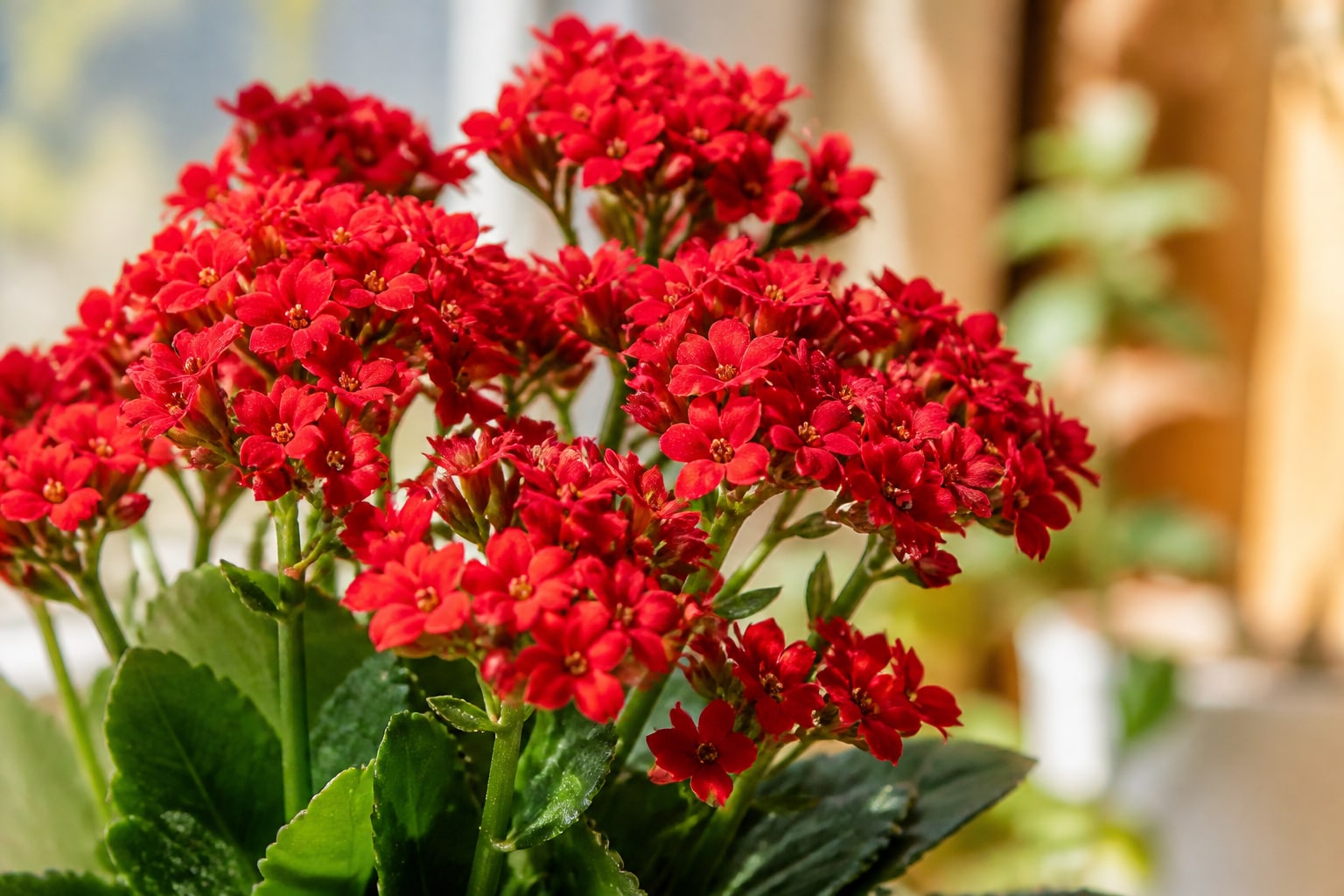
The flowering trick: photoperiod
Here is the key that almost nobody tells you at the supermarket. The Kalanchoe is a short-day plant: it only forms flower buds when it perceives long, uninterrupted nights. Specifically, it needs 12-14 hours of total darkness for 6-8 weeks to trigger flowering.
In nature this happens in autumn. In a modern flat, with artificial light switched on until midnight, its clock gets out of sync and it never flowers. If you want flowers in December or January, do this from October onwards:
- Keep it in bright light during the day (around 10 hours).
- At dusk, put it in a cupboard or cover it with an opaque box.
- Take it out the next morning.
- Repeat for 6-8 weeks in a row, without skipping days.
When you see the first buds, you can return it to its usual spot.
Common problems
- Soft, yellowing leaves: almost always overwatering. Let it dry out and check for rot at the base.
- Long, weak stems (etiolation): lack of light. Move it to a window.
- Not flowering: it is not getting long enough, dark nights. Apply the photoperiod routine.
- Leaves with dry brown spots: direct sunburn through glass in summer.
- Aphids or mealybugs: remove them with a cotton swab dipped in 70% alcohol and check the other nearby plants.
If you are interested in other simple succulents that go well with the Kalanchoe on a windowsill, Echeveria elegans in rosette form has very similar requirements.
Propagation by cuttings
It is so easy it almost feels unfair. Cut a healthy 7-10 cm stem, remove the lower leaves and let it air-dry for 2-3 days so the cut can callus. Then plant it in lightly moistened succulent substrate. In 3-4 weeks it will have roots.
You can also do this with a leaf resting on the substrate, although it takes longer.
Frequently asked questions
Why won’t my Kalanchoe flower even though I look after it well?
It is almost certainly getting too much light at night. Living room lamps interrupt its photoperiod. It needs 12-14 hours of total darkness for at least 6 weeks to form buds.
How long does the flowering last?
Between 6 and 8 weeks if the temperature stays cool (15-18 °C). In very warm environments the flowers wilt sooner.
What should I do when all the flowers fall off?
Cut off the faded flower stems so the plant can recover its energy. Reduce watering and, after summer, repeat the darkness cycle for a new bloom.
Is it toxic to dogs and cats?
Yes. It contains bufadienolides, cardiac glycosides that can cause vomiting, diarrhoea and arrhythmias if animals chew the leaves or flowers. Keep it out of their reach and, at any sign of symptoms, see a vet.
Can I keep it outside on the balcony?
In spring and summer, yes, as long as the minimum temperature does not drop below 10 °C and you protect it from midday sun. In winter, it is better indoors unless you live in a very mild climate.
0 comments · Comment