Beginner aquarium: how to set up your first fish tank
Step-by-step guide to setting up your first freshwater aquarium: ideal size, equipment, cycling and fish recommended for beginners. Everything with concrete times and quantities.
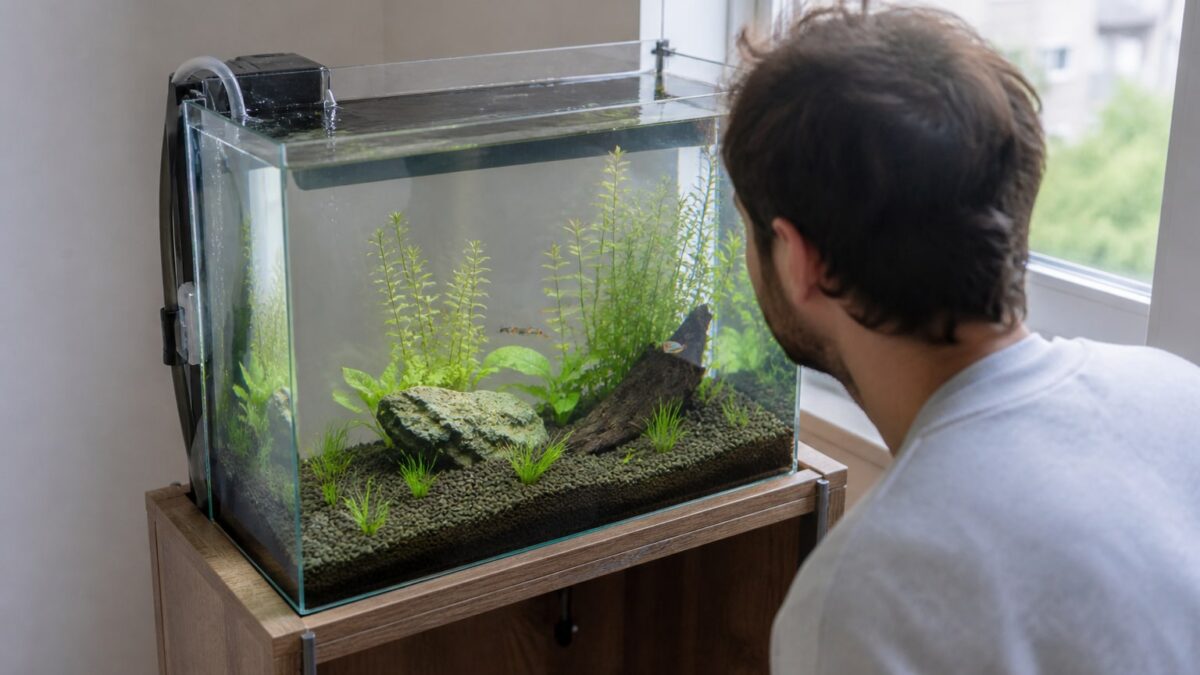
Setting up an aquarium seems simple until you get to the store and face filters, heaters and water test kits you don’t understand. The good news is that with a clear process, and above all patience, anyone can have a stable and healthy aquarium. The bad news is that this process takes weeks, not days. Let’s go step by step.
What size aquarium do you need to start?
The number one mistake beginners make is buying a small tank thinking it’s “easier to maintain”. It’s exactly the opposite. In low volumes, the water becomes unstable much faster: a small excess of food or one extra fish can spike ammonia within hours.
For beginners, it’s advisable to start with at least 40-60 litres. Below 20 litres, the margin for error is almost nil and it’s not a good idea if you’ve never managed an aquarium. From 60 litres onwards, the water tolerates imbalances better and you have more species options.
Essential equipment for a beginner’s aquarium
You don’t need to spend a fortune, but there are pieces that are non-negotiable. This table summarises the basics:
| Equipment | Function | Approximate price range |
|---|---|---|
| Filter (internal or hang-on-back) | Removes waste and houses beneficial bacteria | €15-40 |
| Heater with thermostat | Keeps the temperature stable (22-26 °C depending on species) | €10-25 |
| Thermometer | Daily temperature monitoring | €2-5 |
| Water test kit (ammonia, nitrite, nitrate, pH) | Monitors water quality | €15-30 |
| Substrate (gravel or sand) | Base for plants and bacteria | €10-20 |
| LED lighting | Photosynthesis for plants and day/night rhythm | €15-35 |
| Water conditioner | Neutralises chlorine from the tap | €5-10 |
How to set up the aquarium step by step
- Choose the location: away from windows with direct sunlight and draughts, on a piece of furniture that can bear the weight (1 litre of water weighs 1 kg, plus the weight of the glass and gravel).
- Rinse the substrate under the tap until the water runs clear, without soap or chemical products.
- Place the substrate on the bottom, with a layer of 3-5 cm.
- Add decoration and plants before filling with water, so you avoid disturbing everything afterwards.
- Fill the aquarium with dechlorinated water (use the conditioner according to the manufacturer’s instructions).
- Install the filter, heater and thermometer, and switch them on.
- Let the system run without fish for at least 24-48 hours to check that the temperature stabilises and there are no leaks.
Aquarium cycling: the key step nobody should skip
Cycling is the process through which colonies of beneficial bacteria form and convert ammonia (toxic) into nitrite and then into nitrate (much less harmful). Without this process, any fish you introduce can die from poisoning within a few days, the so-called “new tank syndrome”.
Complete cycling takes between 4 and 6 weeks. You can speed it up with commercial bacteria specifically for aquarium startup, but it’s still advisable to test the water every 2-3 days. You’ll know the cycle is complete when ammonia and nitrite read a sustained 0 ppm and nitrate appears.
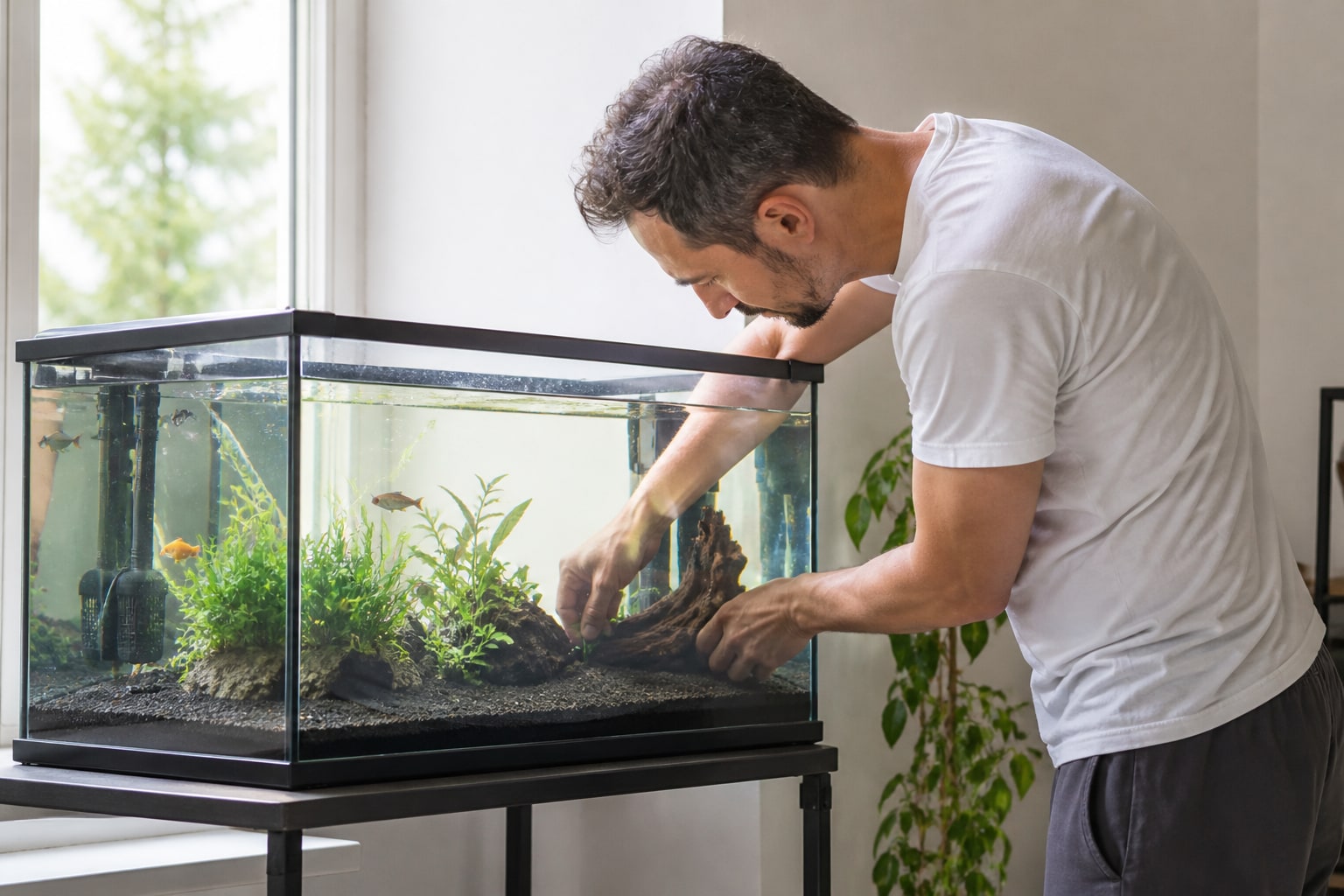
Fish for beginners: recommended species
Not all fish tolerate small imbalances in a newly set-up aquarium equally well. These are hardy and widely available options:
| Species | Scientific name | Recommended minimum litres | Ideal temperature |
|---|---|---|---|
| Zebra danio | Danio rerio | 40 L (in a group of 6) | 20-24 °C |
| Guppy | Poecilia reticulata | 40 L | 24-26 °C |
| Corydoras | Corydoras paleatus | 60 L | 22-26 °C |
| Molly | Poecilia sphenops | 60 L | 24-27 °C |
If what attracts you is an aquarium with a less conventional star, there are also aquatic alternatives such as the axolotl, the Mexican amphibian that never grows up, although it requires colder water and different care from tropical fish.
Basic maintenance: weekly and monthly routines
- Every week: change 15-20% of the water and clean the front glass.
- Every 2 weeks: test ammonia, nitrite and nitrate.
- Every month: rinse part of the filter sponge in water taken from the aquarium itself, never from the tap, so as not to kill the bacteria.
- Feeding: once or twice a day, in an amount they finish in 2-3 minutes. Excess food is the primary cause of water problems.
Common mistakes when setting up your first aquarium
- Adding fish on the same day as setup, without waiting for cycling.
- Overfeeding, thinking “more is better”.
- Buying a tank that is too small to save space.
- Not covering the aquarium, which encourages evaporation and some fish jumping out.
- Changing 100% of the water at once, which destroys beneficial bacteria.
First-week checklist
- Aquarium, filter, heater and thermometer installed and tested.
- Dechlorinated water and stable temperature.
- Substrate and decoration placed before the water.
- Cycling started, no fish yet.
- Hand-held water test for monitoring.
FAQ
How long should you wait before adding the first fish? It’s advisable to wait until cycling is complete, between 4 and 6 weeks, when ammonia and nitrite read a stable 0 ppm.
What is the best aquarium size to start with? Between 40 and 60 litres. A larger volume gives more chemical stability than a small one.
Do I always need a filter and heater? A filter is essential in almost any aquarium. The heater depends on the species: tropical fish need one, cold-water fish do not.
Can I add fish on the same day I set up the aquarium? No. It’s the most common mistake and the main cause of deaths in new aquariums. Cycling must be respected.
How often should the water be changed? A partial change of 15-20% each week is enough in a well-maintained aquarium.
As an Amazon Associate, I earn from qualifying purchases.

0 comments · Comment