Iberian wolf: current status of an icon of Spanish wildlife
We analyze the latest population data, the current legal framework, and the conflict with livestock farming surrounding the Iberian wolf, one of the most debated species in today's Spanish fauna.
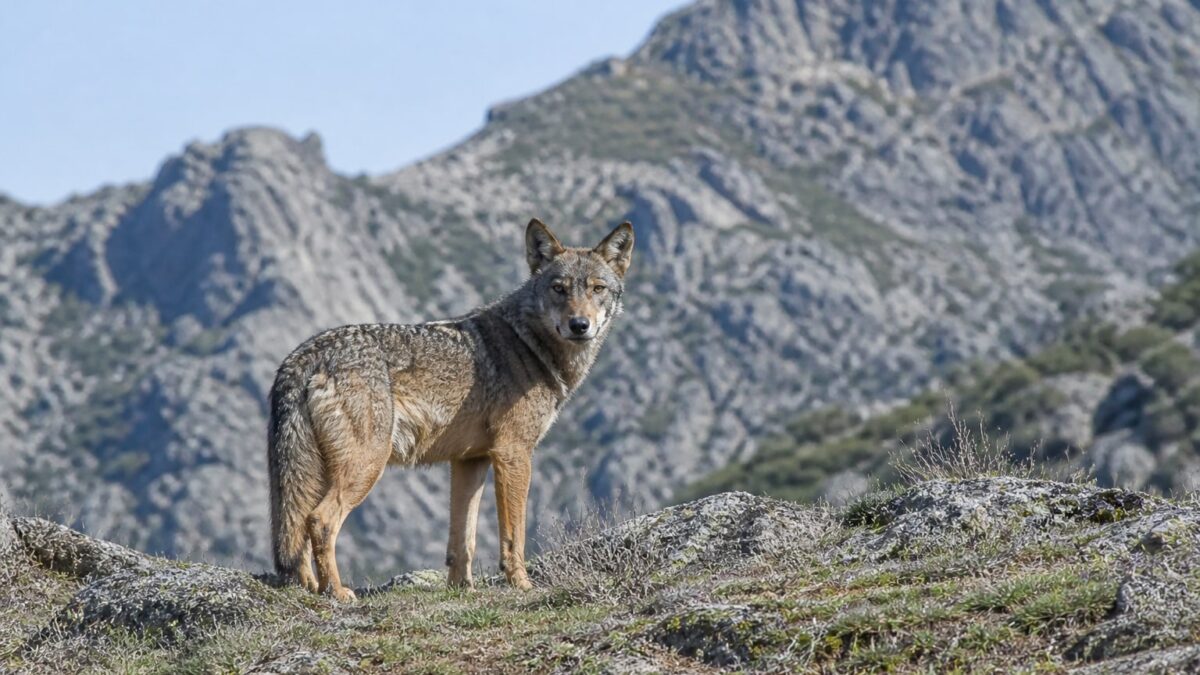
The Iberian wolf (Canis lupus signatus) has for years been at the center of the environmental debate in Spain. It is neither a new nor a rare species: it has shared territory with humans for centuries. Yet few species generate as much controversy when hunting, livestock farming, and legal protection are discussed.
Today it lives in the northwest of the Iberian Peninsula, with a small isolated population in Sierra Morena. Its situation has changed significantly since 2021, when it became protected throughout the national territory. That has not closed the debate; if anything, it has reopened it with greater force.
Identification: subspecies or distinct population?
The Iberian wolf is traditionally considered a subspecies of the gray wolf (Canis lupus), although recent genetic studies question whether it deserves that taxonomic status or whether it is rather a population differentiated by geographic isolation. It measures between 100 and 140 cm in body length, with males weighing 25 to 40 kg as adults and females somewhat less.
It is distinguished from the Eurasian wolf by dark markings on the forelegs and a black line on the tail, which are less pronounced in populations from other regions of Europe. Its life expectancy in the wild is around 8 to 10 years, and it can exceed 14 in captivity.
Distribution and current population in Spain
The most recent official national census is from 2012–2014, coordinated by the Ministry for the Ecological Transition and the Demographic Challenge (MITECO), which estimated between 2,000 and 2,500 individuals and some 297 packs, concentrated mainly north of the Duero River. No updated and homogeneous national census has been carried out since then, so the figures circulating for 2026 come from regional estimates and are not directly comparable with one another.
| Region | Current presence | Approximate situation |
|---|---|---|
| Castilla y León | Main population core | Stable, with the highest density of packs |
| Galicia, Asturias, Cantabria | Consolidated presence | Stable |
| Basque Country, La Rioja | Expanding presence | Slowly growing |
| Sierra Morena (Andalusia) | Isolated population | Critical, a few dozen individuals |
| Pyrenees and central peninsula | Occasional dispersal | Very scarce or absent |
The Sierra Morena population is the most concerning: it is genetically isolated from the rest, has very few individuals, and has no real connection with the northern cores.
Legal framework: is the Iberian wolf protected?
Yes, since 2021 the Iberian wolf has been protected throughout Spain. Order TED/980/2021 included it in the List of Wild Species under Special Protection Regime (LESPRE), which prohibits its hunting and capture across the national territory, including the area north of the Duero where it had previously been permitted through regional quotas.
This reform aligned Spain with the European Union’s Habitats Directive, which already required strict protection for the wolf in most member states. At the international level, the species is listed in Appendix II of the CITES Convention, which regulates, without prohibiting, its international trade.
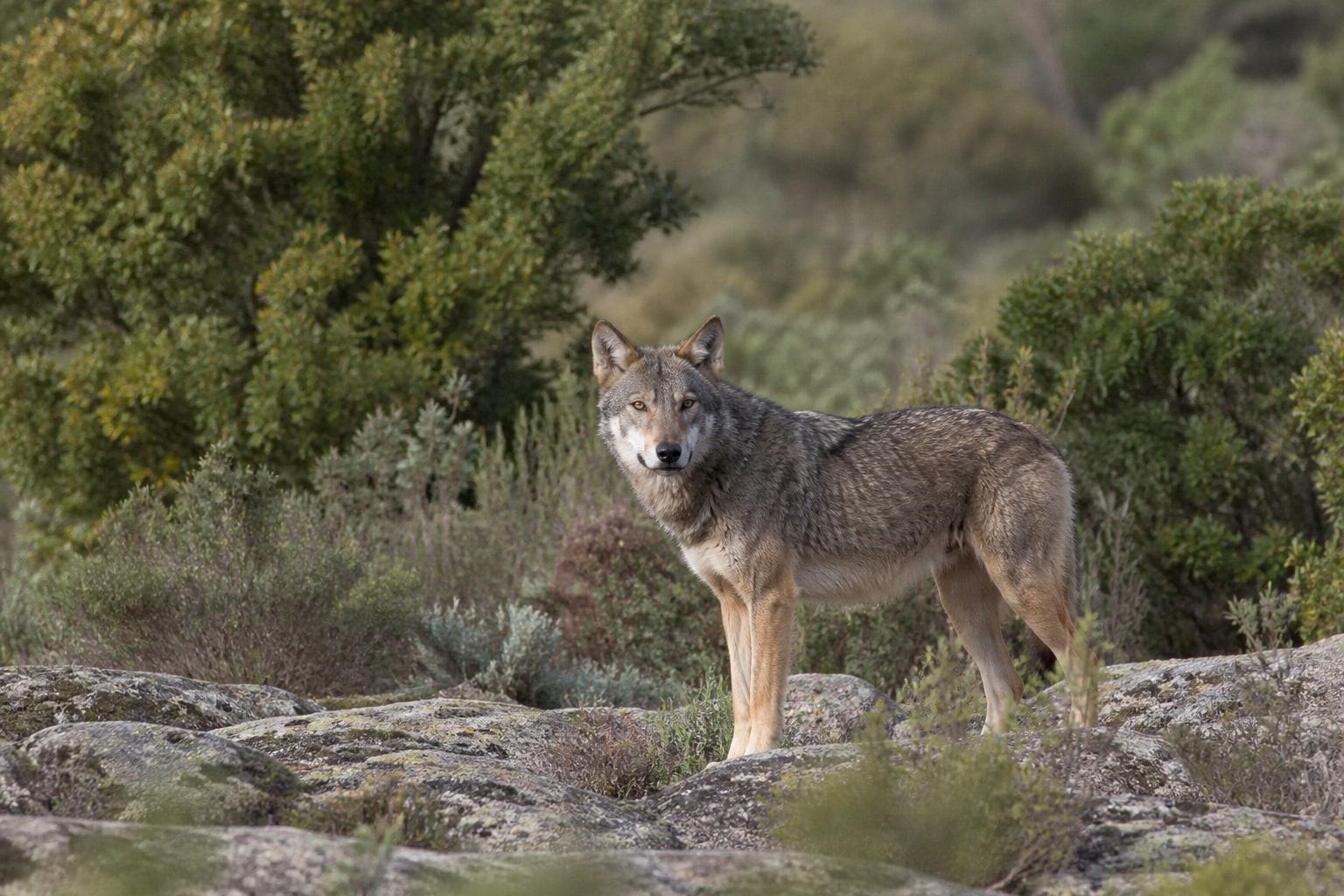
Wolf hunting in Spain: controversy after the 2021 ban
The regulatory change did not please every autonomous community. Castilla y León, Cantabria, and Asturias, among others, challenged the order in the courts, arguing that full protection hinders the control of livestock damage and affects rural activity. The courts have so far upheld national protection, although political debate remains open in several regions.
Conflict with livestock farming
Attacks on livestock, mainly sheep and goats in areas of extensive grazing, are the main source of conflict. The autonomous communities manage compensation schemes for affected farmers, financed with their own funds and, in part, with European money. Prevention programs include guardian dogs, electric fencing, and mobile electric shepherding, with uneven results depending on the area and type of farm.
Conservation status according to the IUCN
The International Union for Conservation of Nature (IUCN) classifies the gray wolf globally as LC (Least Concern), given that the species has large populations in Eurasia and North America. There is no specific IUCN assessment for the Iberian subspecies or population separately. In Spain, beyond the global category, legal protection responds to the fragility of particular populations, especially that of Sierra Morena.
Verifiable facts
- The Iberian wolf can cover more than 30 km in a single night in search of prey.
- Packs usually consist of a breeding pair and their offspring of different years, not of unrelated individuals.
- Its diet is based on wild ungulates such as the wild boar (Sus scrofa) and the roe deer (Capreolus capreolus), as well as domestic livestock in areas of high pressure.
- The Sierra Morena population is considered to descend from a nucleus that survived in isolation after the disappearance of the wolf from eastern Sierra Morena and much of Andalusia during the 20th century.
What is being done: monitoring and active programs
MITECO, together with the autonomous communities, maintains monitoring programs using camera trapping and genetic analysis of droppings. Organizations such as the CBD-Hábitat Foundation work specifically on conserving the Sierra Morena population, with monitoring projects and mediation with local farmers.
FAQ
How many Iberian wolves remain in Spain? The most recent official national census (2012–2014) estimated between 2,000 and 2,500 individuals. No updated national census has been carried out since, so recent figures come from partial regional estimates.
Is the Iberian wolf protected throughout Spain? Yes, since 2021 it has been included in the LESPRE, which prohibits its hunting throughout the national territory, including north of the Duero.
Why is there so much controversy about its protection? Because several autonomous communities consider that it hinders the control of attacks on livestock, while conservation organizations argue that the species still needs strict protection.
Is the Iberian wolf dangerous to people? Attacks on humans are extremely rare in Europe. The main documented conflict is with livestock, not with people.
Is it legal to keep an Iberian wolf as a pet? No. It is a protected wild species; keeping, capturing, or trading it without administrative authorization is prohibited by law.




0 comments · Comment