How to Brush Your Dog According to Its Coat Type
A practical guide to brushing your dog according to its coat: recommended brushes, step-by-step technique, and ideal frequency for each type of canine coat.
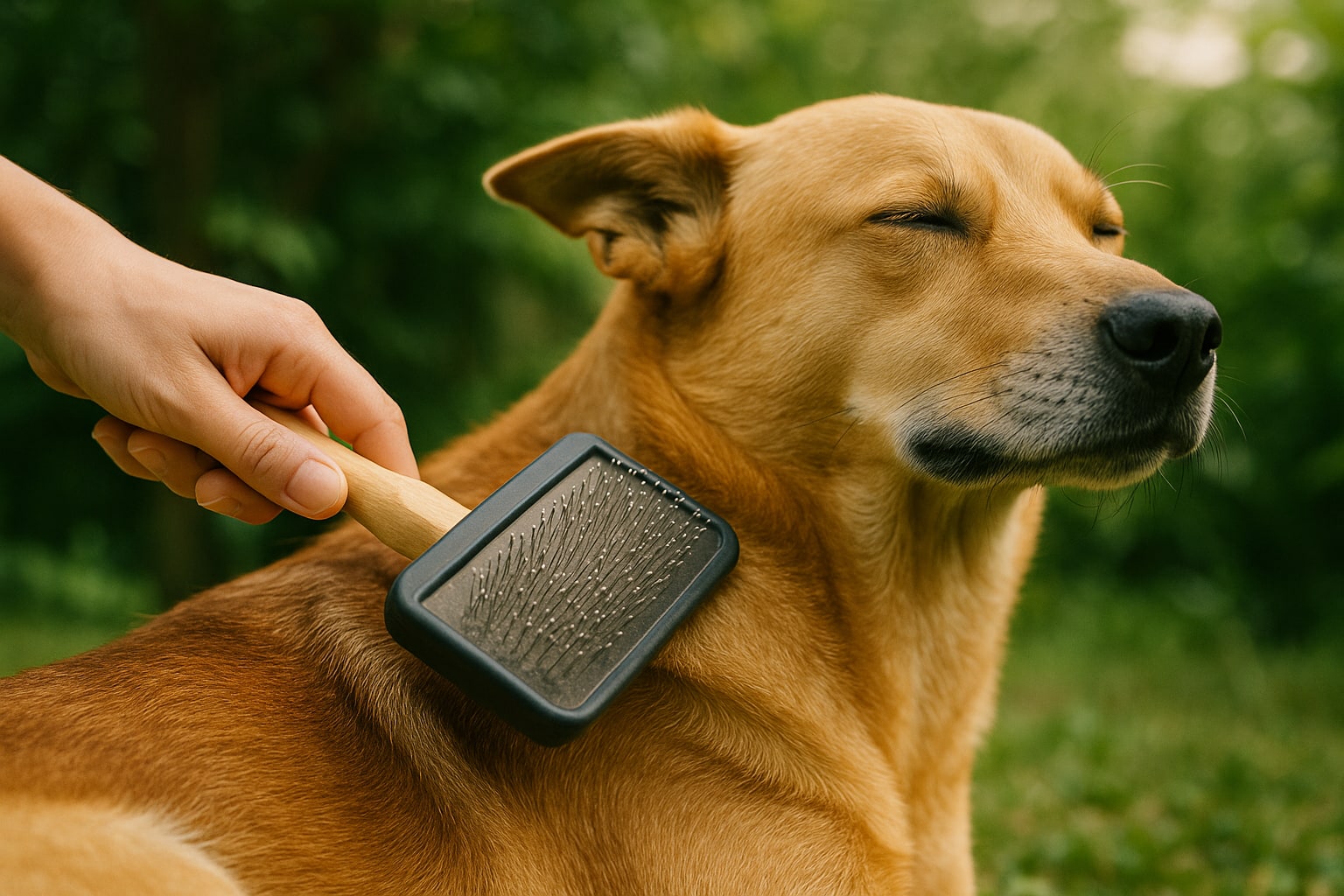
Brushing is not a mere aesthetic whim. It is part of the basic care of any dog (Canis lupus familiaris), and its frequency depends mainly on the type of coat. A French bulldog and a border collie live on the same planet, but their coats call for very different routines.
In this guide you will find the essentials: how to identify your dog’s coat type, which brush to use in each case, and how often you need to take it out of the drawer. No miracles or exotic products.
Why brushing is more than aesthetics
Brushing serves several functions. It removes dead hair, distributes the skin’s natural oils, prevents knots and matting, and lets you detect lumps, parasites, or wounds before they become complicated.
In shedding breeds, regular brushing noticeably reduces the amount of loose hair around the house. And in long coats it prevents the most uncomfortable scenario: a tight knot against the skin that can only be fixed with scissors or clippers.
Identify your dog’s coat type
No two coats are alike, but there are five broad practical categories:
- Short, smooth coat: Labrador, boxer, beagle, dalmatian.
- Long coat: Yorkshire terrier, Shih Tzu, Afghan hound, setter.
- Double coat (dense undercoat + protective outer coat): German shepherd, Siberian husky, golden retriever, Samoyed.
- Curly or woolly coat: poodle, bichon, Spanish water dog.
- Wiry or hard coat: schnauzer, fox terrier, wirehaired dachshund.
Also look at the actual length, not just the breed: mixed-breed dogs combine layers and textures.
Brushing a short-haired dog
Short hair is deceptive. It seems to need no maintenance, but it sheds far more than you think.
Recommended brush: rubber grooming mitt or a brush with short natural bristles. For heavy-shedding breeds, a deshedding blade once a week.
Technique: firm strokes in the direction of the hair, from head to tail. Focus on the back, sides, and rump. Finish with a slightly damp microfiber cloth to remove loose hair.
Frequency: 1-2 times a week. During shedding seasons (spring and autumn), daily for 2-3 weeks.
Brushing a long-haired dog
Here the enemy is knots, especially behind the ears, in the armpits, in the groin, and between the toes.
Recommended brush: pin brush with rounded metal tips + metal comb with wide and narrow teeth. A slicker brush helps with finishing.
Step-by-step technique:
- Part the coat into sections with your hand.
- Work strand by strand, from the tip toward the root, not the other way around.
- If you find a knot, hold it at the base with your fingers so you don’t pull on the skin, and work it loose with the comb.
- Finish by running the comb through the whole coat to make sure nothing is left.
Frequency: every 1-2 days. For breeds like the Afghan hound, daily is reasonable.
Brushing a double-coated dog
A double coat has a dense undercoat that compacts easily and a protective outer coat. It should not be shaved unless a vet advises it: that layer insulates against both cold and heat.
Recommended brush: undercoat rake + slicker brush. Avoid aggressive “furminator”-type blades for daily use; overuse can also remove healthy hair.
Technique: first use the rake in the direction of the hair to remove the undercoat, then the slicker brush in short sections. During shedding, do it outdoors or you’ll fill the house.
Frequency: 2-3 times a week. During seasonal shedding, daily for 3-4 weeks.
Brushing a curly-coated dog
Curly coats hardly shed, but they tangle easily and form mats close to the skin if you neglect them.
Recommended brush: fine-pin slicker brush and metal comb.
Technique: lightly dampen the coat with a detangling spray (or water with a drop of canine-specific conditioner). Work in thin layers, always from tip to root. Dry hair without product breaks.
Frequency: every 2-3 days. Professional grooming every 6-8 weeks.
Brushing a wiry-coated dog
Wiry coats have their own technique: stripping or hand-plucking, which removes dead hair without cutting it. It is done every 2-4 months at a specialized groomer.
Recommended brush for home: soft slicker brush and metal comb.
Home brushing frequency: 2 times a week. If you clip instead of stripping, the coat loses texture and color over time.
Common brushing mistakes
- Brushing over wet, knotted hair: it tightens the knots further.
- Pulling on a knot from the tip without holding the base.
- Using the same brush for every coat type.
- Skipping the armpits, groin, and behind the ears.
- Brushing only before a bath and not afterward.
If you detect sensitive areas, scabs, or parasites while brushing, don’t improvise treatments: consult your veterinarian.
Summary table: brush and frequency by coat type
| Coat type | Main brush | Frequency |
|---|---|---|
| Short | Rubber mitt | 1-2 times/week |
| Long | Pin brush + comb | Daily |
| Double | Rake + slicker | 2-3 times/week |
| Curly | Fine slicker + comb | Every 2-3 days |
| Wiry | Soft slicker + stripping | 2 times/week |
Frequently asked questions
Can I brush my dog every day? Yes, as long as you use the right brush and don’t force it. For long and curly coats it is even recommended.
Is it better to brush before or after a bath? Always before. Water compacts existing knots. After a bath, once the coat is dry, a gentle go-over helps settle the hair.
At what age can I start? From puppyhood, with short sessions of 2-3 minutes and a soft brush. Getting them used to it early prevents handling problems as adults, something that also applies to early socialization work with other pets.
What do I do if my dog hates the brush? Very short sessions, reinforcement with treats, and starting with areas it tolerates (back, sides). Leave the paws and tail for last.
Is the “furminator” safe? It is useful on double coats during shedding, but frequent use can damage the outer coat. Use it sparingly and with light pressure.