Ferrets as pets: what nobody tells you before adopting
A realistic guide to keeping ferrets as pets: legality, odor, a strict carnivorous diet, common diseases and the real costs before adopting.
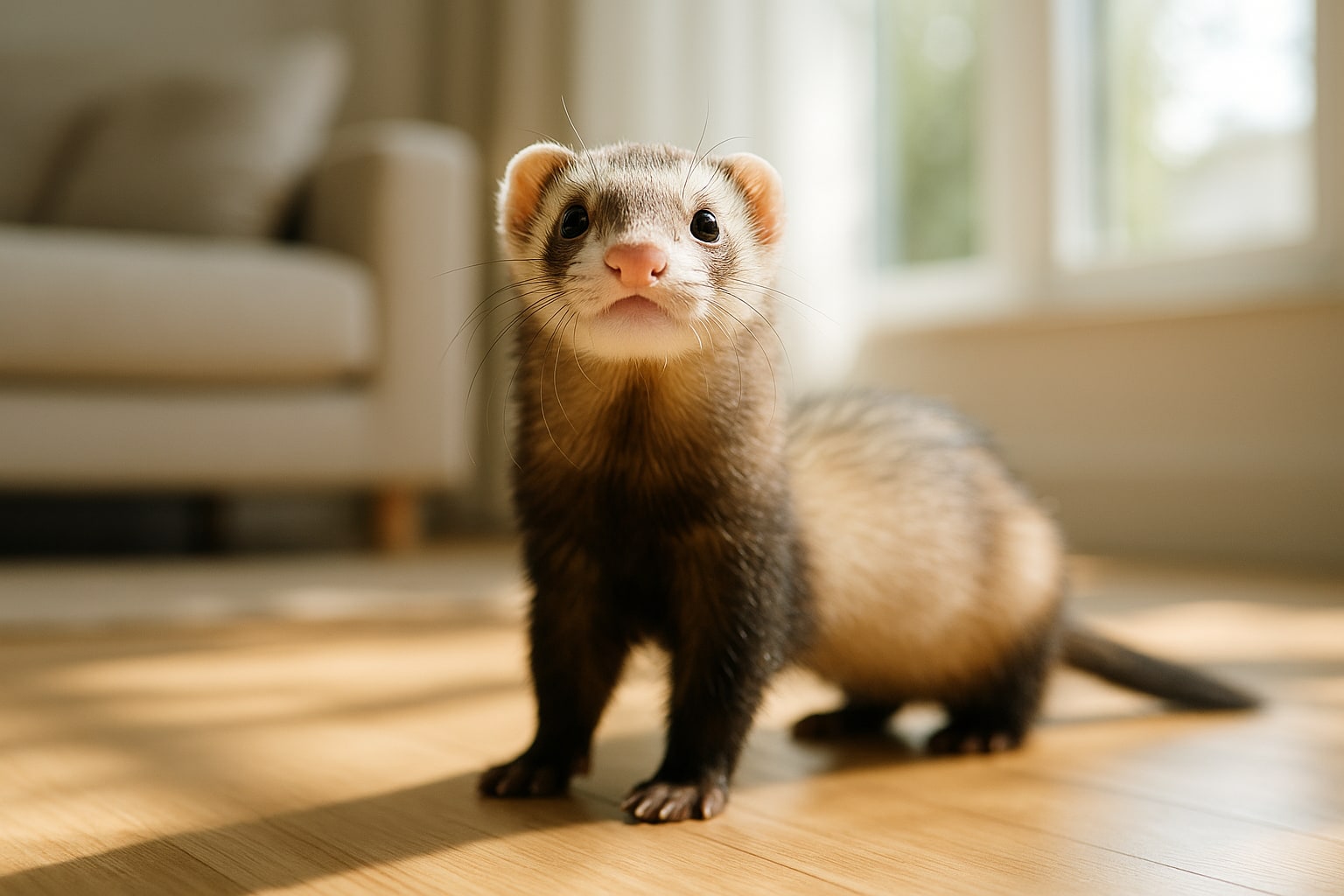
The domestic ferret (Mustela putorius furo) has lived alongside humans for more than 2,000 years, first as a rabbit hunter and today as a companion animal. In Spain it is the third most popular furry pet after dogs and cats, yet it remains surrounded by misconceptions. It is not a rodent. It is not a baby dog. It is a strictly carnivorous mustelid with very specific needs that, if not met, lead to health and behavior problems.
Before adopting one, it is worth knowing what you are getting into. This guide covers what a prospective adopter should ask their veterinarian (and what almost no viral video mentions).
Quick facts about the domestic ferret
| Detail | Value |
|---|---|
| Scientific name | Mustela putorius furo |
| Adult weight | 0.6-1.2 kg (females) / 1-2 kg (males) |
| Length | 35-50 cm plus a 10-15 cm tail |
| Life expectancy | 6-10 years in a well-managed home |
| Diet | Strict carnivore |
| Hours of sleep | 14-18 hours a day |
| Legal status in Spain | Legal as a companion animal |
| Approx. annual cost | 600-1,200 € (excluding emergencies) |
Is it legal to have a ferret in Spain?
Yes. The domestic ferret is recognized as a companion animal in Spain and is listed in the Companion Animal Registry in most autonomous communities. It requires an identification microchip and mandatory rabies vaccination across nearly the whole territory, although there are regional differences: check the regulations of your community.
To travel within the EU it requires an EU pet passport, just like a dog or a cat. It is not included in the Spanish catalogue of invasive exotic species, but feral ferrets do cause ecological damage in places such as New Zealand, where keeping them is prohibited.
Odor: the first thing you must accept
Ferrets smell. Full stop. They have sebaceous glands all over their bodies that produce a characteristic musky odor, especially intact males during the breeding season. Removing the anal scent glands (descenting) does not eliminate this base odor: it only prevents the defensive spray, and in Spain and much of Europe it is considered an unjustified mutilation under the European Convention for the Protection of Pet Animals.
What drastically reduces the odor:
- Neutering of males and females (in females it is also vital for health, as we will see).
- Cleaning the bed and blankets once a week.
- Very infrequent baths: at most one every 2-3 months. Bathing more often is counterproductive and increases sebum production.
If animal odor bothers you, a ferret is not the pet for you.
Feeding: strict carnivore, no shortcuts
The ferret has an intestinal transit time of barely 3-4 hours and cannot digest vegetables or grains. It needs a diet with:
- Animal protein: at least 35-40%.
- Animal fat: 18-25%.
- Fiber: below 3%.
- Carbohydrates: as little as possible.
Viable options:
- Ferret-specific kibble of premium quality (read the label: meat as the first ingredient, no corn or plant by-products).
- High-quality kitten food as an acceptable alternative.
- BARF diet for ferrets (raw meat, organs, meaty bone): nutritionally ideal but requires training and veterinary supervision.
Forbidden: fruit, vegetables, chocolate, dairy, onion, garlic, bread and sugary treats. A single candy can cause hypoglycemia or an intestinal blockage.
Approximate amount: 50-75 g of kibble per day, split into food that is always available, since they eat many small meals. Fresh water at all times, preferably in a heavy bowl rather than a bottle.
Real temperament and behavior
The ferret is crepuscular: most active at dawn and dusk. It sleeps up to 18 hours a day in very deep sleep (if it does not respond when touched, it is probably fine, but it is alarming the first time).
When awake it needs at least 3-4 hours a day out of its cage, exploring and playing. It is extremely curious, squeezes into any gap wider than 4 cm and steals small objects to hide them: socks, remotes, keys. This is called dooking when accompanied by hops and excited vocalizations.
Ferrets bite during play, and kits do so with considerable force. Training takes months of consistency, similar to teaching a puppy to soften its bite. They get along well with other ferrets (in fact it is recommended to keep them in pairs or same-sex neutered groups), tolerate calm dogs, and are usually incompatible with small rodents, birds and reptiles, which they see as prey.
Housing at home
A cage with vertical bars, at least 100 x 60 x 120 cm, with several platforms, a hammock, a dark resting area and a litter tray with vegetable pellets (not clumping litter). Ideal temperature: 15-24 °C. Above 28 °C they easily suffer heatstroke, because they do not sweat.
The living room must be “ferret-proofed”: block gaps behind appliances, remove rubber bands, sponges and soft plastics (they swallow them and cause intestinal obstruction, the most frequent emergency in this species).
Typical diseases you should know about
The ferret is long-lived but prone to specific conditions. The three most common from 3-4 years of age onward:
- Insulinoma: a pancreatic tumor that causes hypoglycemia. Very common.
- Adrenal disease: hair loss, itching and aggression due to hormonal imbalance, linked to early surgical neutering. Today the deslorelin implant is preferred as an alternative.
- Lymphoma.
In addition, unneutered females that come into heat and are not mated develop hyperestrogenism from persistent estrus, with fatal aplastic anemia. Neutering (surgical or by implant) is not optional in females.
Basic vaccination: canine distemper (highly lethal in ferrets) and rabies. Schedule and checkups every six months from age 3, always with a veterinarian specialized in exotic animals.
If you have doubts about bonds with other pets, you may also be interested in reading about how many hours a cat sleeps per day and why it needs it, since the ferret’s sleep patterns are even more extreme.
Honest pros and cons
Pros: small size, intelligent, learns to use a litter tray, very sociable with its people, fun to watch, gets along with other ferrets.
Cons: permanent odor, bites while learning, steals and hides objects, requires an exotic-animal vet (more expensive and less available), prone to tumors from age 4, incompatible with other small pets, cannot be left loose unsupervised.
Suitable home profile
A ferret fits if you live in a flat where you can spend several hours a day with it, you tolerate the smell, you have a budget for an exotic-animal vet, there are no very young children (their play bites hurt) and you do not share a home with guinea pigs, rabbits or birds. If you want a calm, odorless, low-maintenance pet, consider other options such as guinea pigs, which are very sociable and need companionship to thrive.
FAQ
How long does a domestic ferret live? Between 6 and 10 years with good nutrition, neutering and veterinary checkups. Dying before 5 usually points to management problems or genetics.
Can I keep just one ferret? Yes, but you will need to compensate with a lot of daily interaction. Two neutered same-sex ferrets usually live more calmly and are more entertained.
Is it dangerous for children? It is not aggressive, but it bites during play and in its juvenile phase. It is not recommended with children under 6-7 years old without constant supervision.
How much does it cost to keep a ferret per year? Between 600 and 1,200 € including food, litter, vaccines and an annual checkup. Surgery for an intestinal obstruction or cancer treatment can exceed 1,500 € in a single episode.
Can I walk it on a leash? Yes, with a well-fitted H-harness (collars slip off). Walk it in quiet areas, never in full sun, and avoid contact with unfamiliar dogs.