Dog foods that many owners don't know are forbidden
Veterinary guide to foods toxic to dogs, dangerous doses, and what to do after an accidental ingestion. Concrete facts to protect your dog without scares.
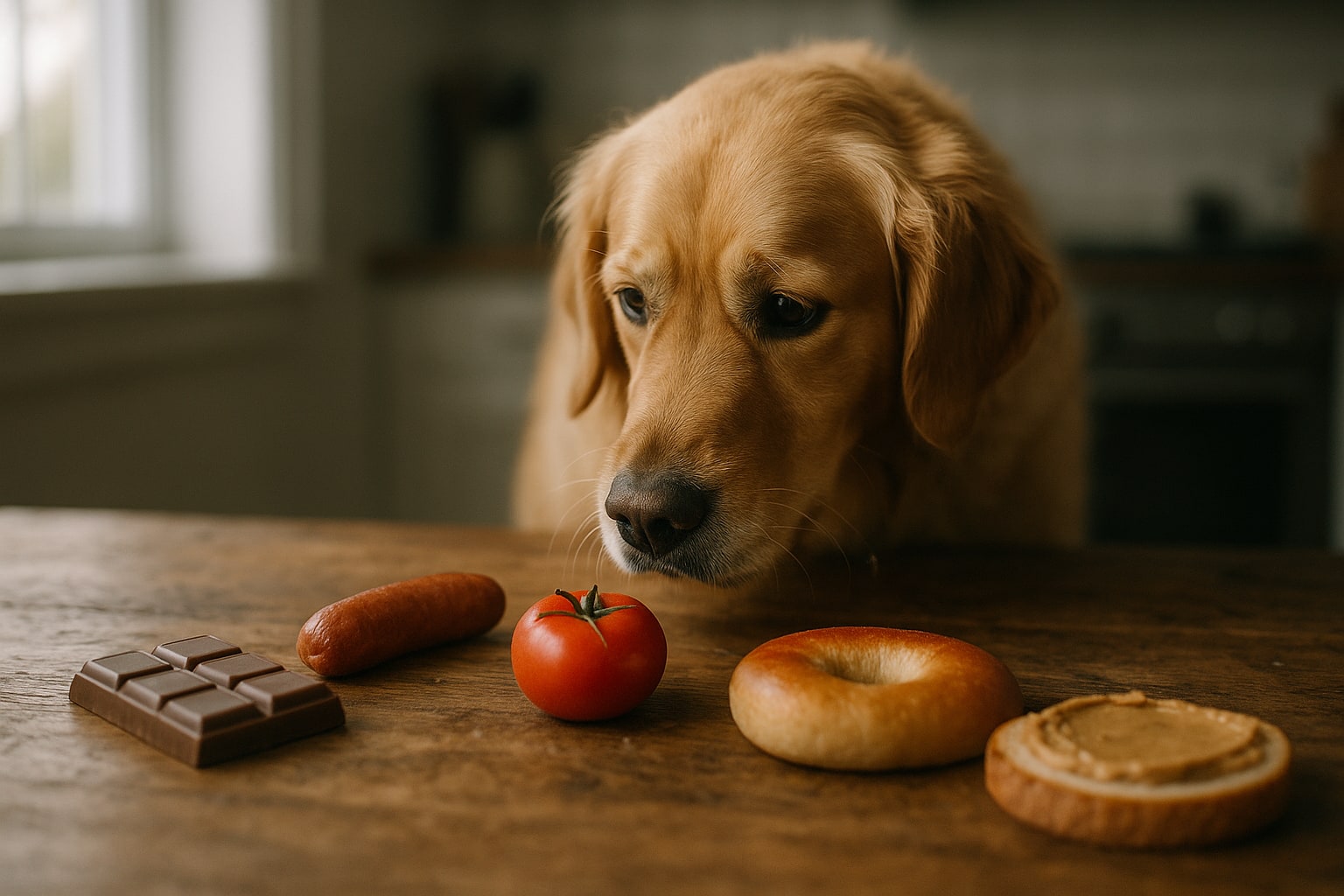
Sharing the table with your dog (Canis lupus familiaris) may seem harmless, but many of the foods you digest without any problem can cause him anything from mild gastroenteritis to acute kidney failure. The difference between a scare and a veterinary emergency usually lies in the dose and in the animal’s weight: what a 30 kg Labrador tolerates can be lethal for a 3 kg Yorkshire.
This guide covers the foods forbidden for dogs with the strongest clinical backing, the mechanisms by which they are toxic, and the protocol recommended by veterinary centers after an accidental ingestion. It does not replace consulting your veterinarian; it complements it.
Why a food that is safe for you can be toxic to your dog
Canine metabolism is not a small version of the human one. Dogs lack certain liver enzymes that break down compounds such as methylxanthines (caffeine, theobromine) or process polyols such as xylitol differently. In addition, their body size amplifies the effect: 50 grams of dark chocolate is a snack for you and a potentially fatal dose for a small dog.
The most dangerous foods: mechanism and toxic dose
Chocolate and cocoa
The culprit is theobromine, a methylxanthine that dogs eliminate very slowly (half-life of 17.5 hours versus 2-3 in humans). The toxic dose is around 20 mg/kg for mild symptoms and 60 mg/kg for arrhythmias and seizures.
- Dark chocolate (70%): 15-20 g is enough to poison a 10 kg dog.
- Milk chocolate: about 100 g in a 10 kg dog.
- Pure cocoa powder: the most concentrated, just 5-10 g is already dangerous.
Symptoms: vomiting, tachycardia, hyperactivity, tremors.
Xylitol (sweetener in chewing gum, baked goods and some creams)
It is probably the food that is most underestimated. In dogs it causes a massive release of insulin and severe hypoglycemia within 15-30 minutes. Toxic dose: 0.1 g/kg. A single 1 g piece of gum can knock down a 10 kg dog. Doses above 0.5 g/kg cause acute liver failure.
Check the labels of chewing gums, sugar-free candies, “light” peanut butters and some toothpastes.
Grapes and raisins
The mechanism is still not fully clarified, but the association with acute kidney failure has been well documented since the 1990s. There is no safe dose: cases have been described with 10-30 g of grapes in medium-sized dogs. Raisins concentrate the effect (2.8 g/kg may be enough).
Onion, garlic, leek and chives (the Allium family)
They contain thiosulfates and disulfides that oxidize hemoglobin and cause hemolytic anemia. Garlic is about 5 times more potent than onion. Toxic dose of onion: 15-30 g/kg. Watch out for broths, sauces, sautés and baby food that include it.
Avocado
It contains persin, mainly in the skin, pit and leaves. In dogs the greater risk is not so much the persin —they tolerate it better than other animals— but the intestinal obstruction from the pit and the high fat content, which can trigger pancreatitis.
Macadamia nuts
2 g/kg is enough to cause weakness, tremors, hyperthermia and ataxia within 12 hours. It is usually reversible within 24-48 h, but requires veterinary care.
Alcohol and raw yeast dough
Ethanol is absorbed quickly and depresses the central nervous system. Dough fermenting in the stomach generates ethanol and gastric dilation, two emergencies at once.
Coffee, tea and energy drinks
Same methylxanthine family as chocolate. Caffeine is toxic from 20 mg/kg. A small dog that eats a handful of coffee beans can suffer arrhythmias.
Cooked bones
They splinter and perforate the digestive tract. Raw bones carry other risks (contamination with Salmonella), but cooked ones are a frequent cause of emergency surgery.
Others to avoid
- Excess salt (potato chips, olives, cold cuts): >4 g/kg can cause hypernatremia.
- Milk and dairy: most adult dogs are lactose intolerant.
- Stone fruits (peach, cherry, plum): the pits contain cyanogenic glycosides and cause obstructions.
- Raw pork: risk of Aujeszky’s disease, which is fatal.
- Very fatty food (bacon, cold cuts): the main trigger of acute pancreatitis.
Fruits and vegetables: which are safe and which are not
Safe in small amounts: seedless apple, banana, blueberries, seedless watermelon, carrot, cooked pumpkin, cucumber, green beans.
Forbidden or risky: grape, raisin, avocado (with nuances), citrus in quantity, green tomato, onion, garlic, rhubarb, wild mushrooms.
Apple seeds contain amygdalin; one or two do nothing, a handful does. Always remove them.
What to do if your dog has eaten something toxic
- Identify the food and the amount ingested. Keep the packaging if there is any.
- Mentally weigh your dog and calculate the dose per kg.
- Call the veterinarian or a 24-hour emergency service before doing anything else. In Spain there is the National Toxicology Institute phone number (91 562 04 20), which also handles veterinary consultations.
- Do not induce vomiting on your own. With caustic substances or if the dog is lethargic, inducing vomiting makes the condition worse.
- If the veterinarian advises it, go with the packaging, a sample of the vomit and the approximate time of ingestion.
The sooner you act (ideally within the first 2 hours), the more effective activated charcoal or gastric lavage will be.
Common owner mistakes
- Giving leftovers “just a little”. Toxicity is cumulative in some cases.
- Keeping xylitol gum in easily reached bags.
- Leaving the baking tray cooling on the countertop.
- Sharing ice cream or milky coffee in summer.
- Giving away cooked bones after the family meal.
If you have just adopted, also review how to prepare a puppy’s arrival at home step by step: it includes what should be within reach of the dog —and what should not.
FAQ
How much chocolate can kill a dog? It depends on the type and the weight. As a reference, 60 mg/kg of theobromine is the severe dose. A 10 kg dog can become seriously poisoned with 50-70 g of 70% dark chocolate.
Is xylitol really that dangerous? Yes. It is one of the fastest poisonings: hypoglycemia within 15-30 minutes and risk of liver failure at higher doses. A single piece of gum may be enough in small dogs.
Can I give my dog cheese or York ham? Occasionally and in very small pieces, yes, but not as a rule. Excess salt and fat favor pancreatitis, and many dogs do not tolerate lactose well.
And if it has eaten just one grape? Consult the veterinarian anyway. There is no established safe dose, and some dogs react to very small amounts.
Are raw bones safe? Less dangerous than cooked ones, but they carry bacterial risk and risk of dental fractures. Many veterinarians prefer commercial chewable alternatives.