Why your dog wags its tail: it doesn't always mean happiness
A dog's tail wag is not an automatic sign of happiness. Find out what science says about lateral asymmetry and how to interpret each gesture.
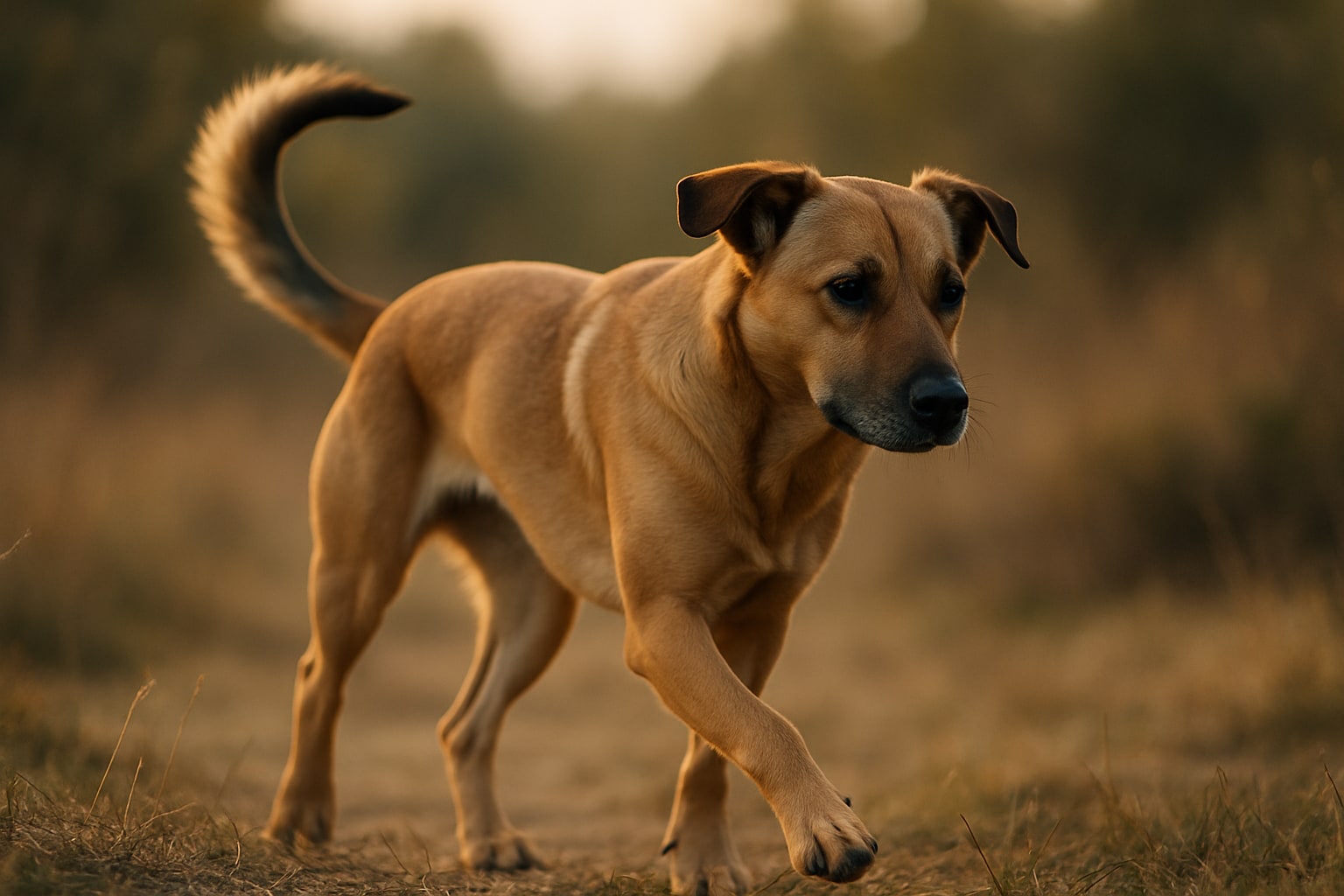
If you have a dog (Canis lupus familiaris) at home, you’ve surely interpreted the movement of its tail hundreds of times. Tail up and wagging: happy. Tail down: sad. The popular reading is as intuitive as it is incomplete. Modern ethology has spent two decades showing that the tail works more as an indicator of emotional arousal than as a thermometer of joy.
And this is no minor detail. Mistaking a tense wag for an invitation to play can end in a bite, especially when children or unfamiliar dogs are involved.
The tail as a communication system
In canids, the tail serves functions that go beyond balance. It is a visual amplifier of other body signals: ears, posture, gaze, raised fur. When the dog moves it, it is communicating that “something is happening” on an emotional level, but it does not specify what.
Wolves, coyotes and dogs share a similar repertoire of tail postures. The difference is that artificial selection has produced tails of all shapes and lengths, which sometimes complicates reading across breeds.
What emotional arousal is
In ethology, the term arousal refers to the level of physiological and emotional excitation of an animal. A dog with high arousal has a racing heart, rapid breathing and tense muscles. This happens equally when it sees its human come home as when it faces another dog it dislikes.
That is why the wag, on its own, only tells you: “there is emotion here”. The rest of the body tells you whether it is positive or negative.
The University of Trento study: lateral asymmetry
In 2007, the team led by Giorgio Vallortigara at the University of Trento published in Current Biology a finding that changed the classic reading of the tail. Recording dogs exposed to different stimuli, they observed a clear pattern:
- When the dog saw its owner, the tail moved more to the right (relative to the dog’s own axis).
- Facing an unfamiliar dominant dog, the movement shifted to the left.
- Facing a neutral stimulus, the movement was more symmetrical.
In 2013, the same group (Siniscalchi et al., Current Biology) showed that other dogs perceive this asymmetry and react with more tension to a left-sided wag than to a right-sided one. The explanation lies in brain lateralization: the left hemisphere processes emotions of approach and the right one those of withdrawal, and each controls the opposite side of the body.
A fast wag does not equal happiness
One of the most common mistakes is equating the speed of the wag with the intensity of joy. It doesn’t work that way. A fast, short and tense wag, with the tail held high and rigid, usually indicates alertness or imminent threat, not welcome.
Speed marks emotional intensity. Direction (right/left) and height mark valence (positive or negative).
How to read the wag: height, speed and rigidity
These are the three parameters worth checking before drawing conclusions:
- Height: tail above the line of the back suggests high arousal and often confidence or challenge. Tail level with the back, neutral state. Tail low or between the legs, submission or fear.
- Speed: the faster, the higher the arousal. It does not imply positive emotion.
- Rigidity: a stiff tail that vibrates is one of the clearest signs of tension. A relaxed tail that wags with the whole body is usually sociable.
Positive signals versus warning signals
A wag associated with a friendly context usually includes a relaxed body, a slightly open mouth, neutral ears and hips moving along with the tail. It is the classic “full-body wag”.
Warning signals combine a high, rigid tail, a tense body, a fixed stare, retracted lips or raised fur on the withers. Even if the tail is moving, that dog is not inviting contact.
Differences by breed and morphology
Not all tails communicate in the same way. A Siberian husky with its tail curled over the back has a resting posture that in another breed would indicate alertness. Greyhounds usually carry the tail low without that meaning fear. And breeds with short or docked tails (a practice prohibited in Spain since the ratification of the European Convention for the Protection of Pet Animals, except for veterinary exceptions) lose a large part of the communication channel.
Knowing your dog’s baseline posture is essential before interpreting changes.
When the tail indicates stress
Stress signals that usually accompany the wag:
- Low tail moving quickly with the hind legs slightly bent.
- Panting without heat or prior exercise.
- Yawning, licking of the muzzle, avoiding eye contact.
- Dilated pupils and “whale eye” (showing the white of the eye).
If you notice this pattern frequently, it is advisable to review the environment and consult a veterinary ethologist or a behaviour modification professional.
What to do if you are unsure when approaching a dog
With an unfamiliar dog, the rule is simple: don’t interpret the tail alone. Observe the whole picture. If the owner is absent or does not give permission, do not approach. Offer the side of your body, not a hand raised over the head, and let the dog decide when to close the distance.
Reading the tail correctly is not a party trick: it is a tool for coexistence and accident prevention. And, above all, a way of respecting what your dog is telling you in the only language it has.
Frequently asked questions
Does a dog that wags its tail never bite? False. Many bite incidents occur with the tail in motion. Wagging indicates arousal, not absence of aggression.
Why does my dog wag its tail while sleeping? It may respond to dreams with motor activity (REM phase) or to mild external stimuli. If it is accompanied by occasional vocalizations, it is normal.
Do puppies wag their tails from birth? No. Communicative wagging appears between 3 and 4 weeks of age, when they begin to interact with siblings and mother.
Is it true that they wag more to the right with their owners? Yes, it is the central finding of the studies by Vallortigara and Siniscalchi. It reflects emotional processing in the left hemisphere, associated with approach stimuli.
And can tailless breeds communicate in the same way? They do communicate, but they lose nuances. They compensate with ears, posture and facial expressions, although other dogs may misinterpret them more easily.