Why dogs bury their toys and bones
Find out why dogs bury their toys, bones and even food: a mix of ancestral instinct inherited from the wolf and current behavioral factors.
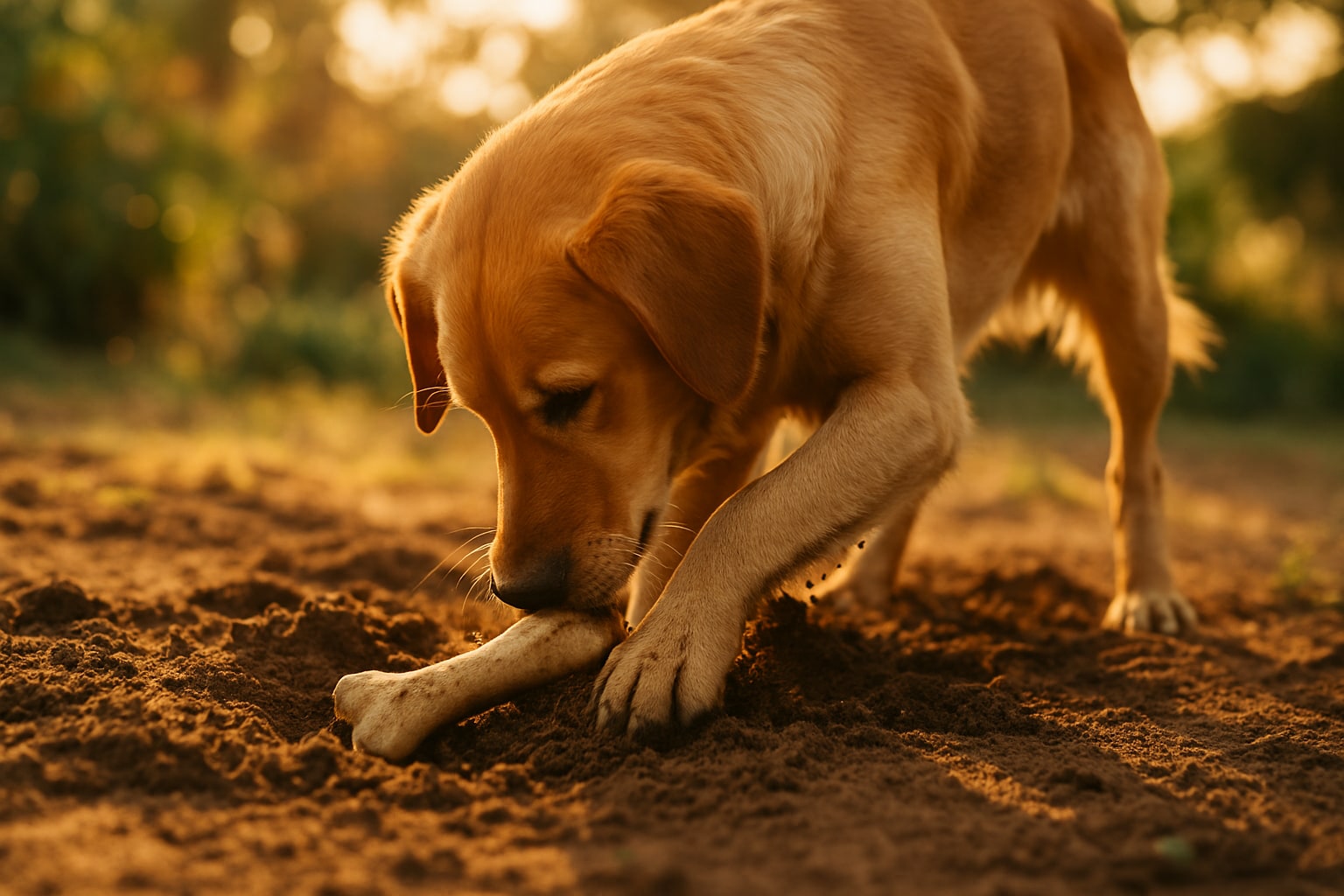
Your dog grabs his favorite bone, heads to the garden (or the sofa) and starts digging as if he were looking for oil. Then he covers it with soil, blankets or cushions. And he stays perfectly calm.
This behavior, as common as it is striking, has an explanation that mixes genetics, ethology and domestic context. It is neither a whim nor a strange quirk. It is a behavior deeply rooted in the biology of the domestic dog (Canis lupus familiaris).
An instinct inherited from the wolf
Dogs descend from the grey wolf (Canis lupus), with which they share more than 99% of their DNA. And wolves, when they hunt a large prey, don’t always eat it all. They bury the leftovers to return to them days later, when game becomes scarce.
This strategy is called caching (storage by concealment) and is documented in many wild canids: wolves, coyotes, red foxes (Vulpes vulpes) and even jackals. The soil acts as a natural fridge: it keeps the meat fresher, protects it from the sun and scavengers, and masks the smell.
Even though your dog eats kibble served in a bowl twice a day, that neural circuit is still there. It has not forgotten it in 15,000 years of domestication.
Protecting valuable resources
In canine ethology we speak of resource guarding (resource guarding) when a dog defends something it considers valuable: food, toys, a resting spot or even a person.
Burying is a “peaceful” version of that protection. Instead of growling or standing guard, the dog takes the resource out of sight. If nobody sees it, nobody steals it. It is a very efficient logic.
This behavior appears most often when there is:
- Several dogs at home competing for toys or snacks.
- Abundant food that exceeds what the dog can eat at once.
- New objects that the dog perceives as especially valuable (a natural bone, a toy with a strong smell).
Overfeeding: more food than he needs
If your dog buries food or snacks, ask yourself an uncomfortable question: are you giving him too much?
A healthy adult dog usually does not hide food if he is truly hungry. When he stores kibble, biscuits or pieces of bone, it is often because his daily ration exceeds what he needs at that moment. His instinct tells him: “this is surplus, save it for tomorrow.”
Check the recommended amounts according to weight and activity, and consult your veterinarian if in doubt. It is also worth knowing which foods are directly dangerous: here is a guide to foods that are forbidden for dogs that many owners are unaware of.
Anxiety, boredom and stress
Not everything is ancestral instinct. Sometimes, burying is a symptom of distress.
A dog that compulsively scratches the sofa to “bury” a toy every five minutes may be showing signs of separation anxiety, chronic boredom or a lack of mental stimulation. Digging releases energy and produces a self-soothing effect, similar to what humans seek when chewing on a pen.
Signs that the behavior has become problematic:
- He does it repetitively and nonstop, even without objects to bury.
- It appears together with destruction, barking or excessive panting when he is left alone.
- He damages his paw pads by digging on hard floors.
In these cases, the solution is not to scold. It is to increase exercise, enrich the environment (scent toys, stuffed Kongs, walks with free exploration) and, if it persists, to consult a veterinary ethologist.
Breeds most predisposed to burying
Although any dog can bury, there are breeds where the behavior is especially marked, above all those selected for hunting or digging burrows:
- Terriers (Jack Russell, Fox Terrier, Yorkshire): they were bred to enter fox and badger dens.
- Dachshund: its German name literally means “badger dog”.
- Beagle and other scent hounds: they track and hide things.
- Nordic dogs (Siberian Husky, Alaskan Malamute): they dig to make fresh nests in snow or soil.
If you live with any of these breeds, understanding that digging and hiding are part of their natural repertoire will spare you frustration.
How to manage it without suppressing the dog
Burying is not a problem in itself. You only need to redirect it when it becomes a nuisance or when it hides signs of stress.
Practical recommendations:
- Reduce the number of toys available. Rotate 3-4 each week. Overabundance triggers the instinct to store.
- Adjust the food ration with your veterinarian if he buries kibble or snacks.
- Offer him an allowed digging area: a box with sand or soil in the garden where he can dig freely.
- Stimulate his sense of smell with search games. Channel the energy into something constructive.
- Don’t scold him or dig up the object in front of him. You would increase anxiety and resource guarding.
Just as you learn to interpret other signals from your dog beyond the wagging of his tail, understanding why he buries helps you read him better.
FAQ
Is it bad if my dog buries his toys? No, in most cases it is normal behavior. It only becomes a concern if it turns compulsive or is accompanied by anxiety, destruction or loss of appetite.
Why does my dog bury food when his bowl is full? It usually indicates that the ration exceeds what he needs to eat at that moment. His instinct leads him to save the surplus for later.
Do puppies also bury things? Yes. The behavior appears early, even before 6 months, although it is refined with age. It is part of normal development.
Can I teach him not to bury things in the sofa? Yes, by redirecting the behavior. Offer him an alternative place (a thick blanket, a digging box in the garden) and reinforce when he uses it. Never punish the digging itself.
Does burying objects indicate a lack of trust in me? No. It is an instinctive behavior, not a criticism of your bond. A dog can adore his family and still hide his favorite bone.