The most affectionate dog breeds for families with children
A practical guide to choosing the most suitable dog breed if you live with children: temperament, energy level, size and safe-coexistence tips backed by veterinary criteria.
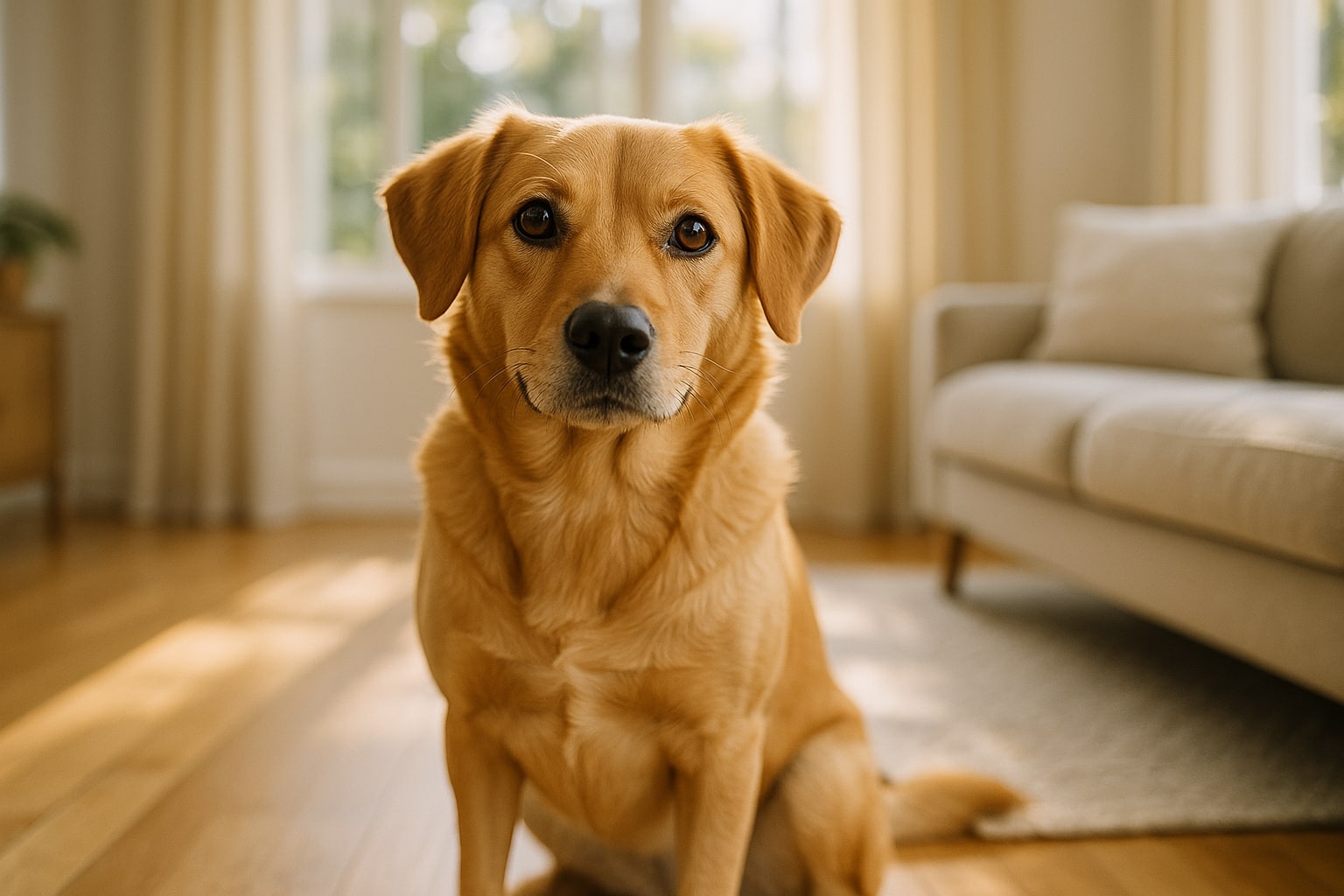
Choosing a dog when there are children at home is not about trends or looks. It’s about temperament, energy and tolerance. A good family dog is not the most “beautiful” or the most popular on Instagram: it’s the one that fits your lifestyle, the size of your home and your previous experience.
In this guide we review the breeds that, according to cynological clubs such as the American Kennel Club (AKC) and the Fédération Cynologique Internationale (FCI), consistently show a balanced character, sociability and patience with children. You’ll also find out what to avoid and how to ensure safe coexistence from day one.
What makes a breed “good with children”
There is no perfect breed, but there are traits that score points when little ones are at home:
- Stable temperament: low reactivity to noises, sudden movements or strangers.
- Tolerance to handling: accepts petting, clumsy hugs and play without showing signs of stress.
- Sociability: enjoys human company and shows no tendency toward isolation or excessive guarding.
- Compatible energy: neither a racing greyhound in a 60 m² flat nor a giant mastiff where there is no room.
- Manageable size depending on the children’s age: very small dogs are easily injured; very large ones can accidentally knock down a small child.
Genetics sets a foundation, but early socialization (between 3 and 14 weeks) and training matter just as much as, or more than, the breed.
Summary table: family breeds by profile
| Breed | Size | Energy | Ideal for |
|---|---|---|---|
| Labrador Retriever | Large (25-36 kg) | High | Active families with a garden |
| Golden Retriever | Large (25-34 kg) | Medium-high | Families with young children |
| Beagle | Medium (10-15 kg) | High | Homes with outdoor space |
| Cavalier King Charles Spaniel | Small (5-8 kg) | Medium | Flats and children over 6 years old |
| Boxer | Large (25-32 kg) | High | Experienced families with space |
| Bichon Frise | Small (5-7 kg) | Medium | Flats and first-time families |
| Newfoundland | Giant (50-70 kg) | Low-medium | Large homes, children of any age |
Labrador Retriever
The labrador retriever (Canis lupus familiaris, a breed recognised by the FCI in group 8) is the classic family dog for solid reasons: sociable, patient, food-motivated (which makes training easier) and very tolerant of children. It lives 10 to 12 years.
Pros: easy to train, good swimmer, very sociable with other dogs. Cons: needs 1-2 hours of exercise daily. If bored, it will chew whatever it finds. Predisposition to hip dysplasia and overweight.
Golden Retriever
Similar to the Labrador in character, but with longer coat and a notch calmer. The golden retriever stands out for its extreme patience with young children. Lifespan: 10-12 years.
Pros: almost proverbial gentleness, an excellent therapy dog. Cons: heavy shedding (brush 3-4 times a week), predisposition to certain types of cancer according to studies by the Morris Animal Foundation Golden Retriever Lifetime Study.
Beagle
The beagle is a medium-sized hound, curious, hardy and very playful. It suits active children who want an adventure companion. It lives 12-15 years.
Pros: robust, manageable size, sociable with other dogs. Cons: barks and “bays” a lot, unbeatable sense of smell that leads it to escape, hard to recall once it picks up a scent.
Cavalier King Charles Spaniel
One of the most balanced companion dogs. The cavalier king charles spaniel is affectionate, adaptable and calm. Ideal for flats. Lifespan: 9-14 years.
Pros: small, sociable, rarely barks. Cons: high incidence of degenerative mitral valve disease and syringomyelia. Requires regular cardiology check-ups; consult your veterinarian for follow-up.
Boxer
The boxer is energetic, playful and very attached to “its” family. Well socialised, it is patient with children. It lives 10-12 years.
Pros: protective without being aggressive, very lively, short coat that is easy to maintain. Cons: considerable strength (it can knock a small child over by accident), sensitive to heat due to its brachycephalic muzzle, predisposition to tumours.
Bichon Frise
Small, cheerful and barely sheds. The bichon frise is a sensible option for families living in a flat with children aged 6-7 and up who can handle a small dog without treating it like a toy. It lives 12-15 years.
Pros: flat-sized, sociable, low allergen. Cons: needs grooming every 6-8 weeks, may develop separation anxiety.
Newfoundland
The newfoundland is a calm giant. Its gentle temperament has earned it the nickname “nanny” in popular culture, although this does not exempt it from adult supervision. It lives 8-10 years.
Pros: enormous patience, excellent swimmer, very balanced. Cons: size (up to 70 kg), drools, needs space and a matching veterinary budget. Predisposition to heart and joint problems.
Safe coexistence between dogs and children
No dog, however docile, should be left without adult supervision with a young child. These basic rules prevent most incidents:
- Teach the child not to bother the dog while it eats, sleeps or chews a toy.
- Never allow the child to climb on it, or pull its ears or tail.
- Respect the dog’s stress signals: yawning, licking its lips, looking away, growling. Growling is a warning, not an attack: punishing it removes the warning, not the discomfort.
- Create a safe space (bed, crate) where the dog can withdraw without anyone bothering it.
To complete the grooming routine, learn how to brush your dog according to its coat type, a habit that also strengthens the bond with the children.
Common mistakes when choosing a breed
- Choosing based on looks without considering energy or size.
- Buying on impulse from breeders without health guarantees or genetic testing.
- Ruling out adoption: many adult mixed-breed dogs have a proven character and are excellent with children.
- Thinking “it’s a puppy, it will learn on its own”. Education starts on day one.
FAQ
Which dog breed is most affectionate with young children? The golden retriever and labrador retriever top almost every AKC ranking for balanced temperament and tolerance. The Newfoundland is another very patient option if there is space.
Is a small or large dog better when there are children? It depends on age. With children under 5, very small dogs are easily injured. With older children, a medium-large dog usually tolerates play better.
Which breeds should be avoided with very young children? Breeds with a strong guarding instinct or low tolerance for rough handling require expert management. It is not a question of “dangerousness” but of compatibility and owner experience.
Can an adopted dog be a good family dog? Yes. Many rescue organisations assess temperament before rehoming. An adult with an established temperament can be more predictable than a puppy.
At what age is it safe to leave a child alone with the dog? Paediatricians and canine educators agree that adult supervision is essential at least until ages 8-10, and always depends on the maturity of the specific child and dog.