Pelargonium hortorum: how to care for geraniums to fill your balcony with flowers
Discover how to care for geraniums (Pelargonium hortorum) with specific data on watering, light, fertilizer and pruning to achieve continuous flowering on your balcony.
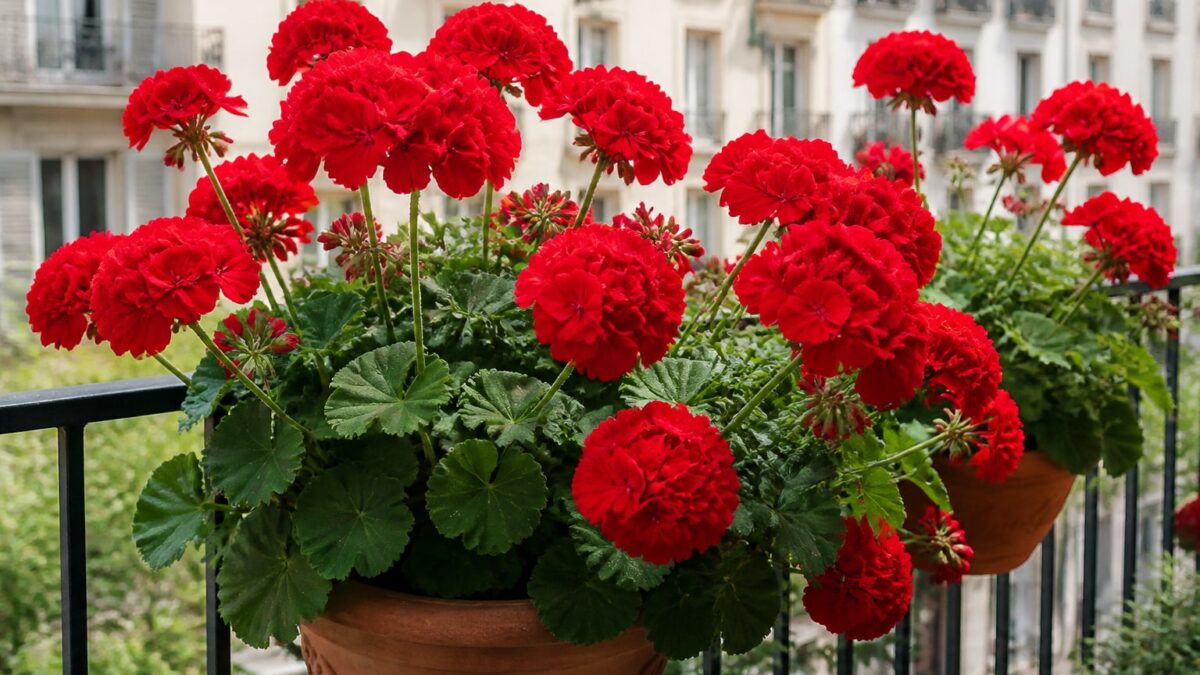
The balcony geranium, Pelargonium hortorum, is one of the most widely seen flowering plants on windows and terraces across Spain. This is no coincidence: it withstands direct sun, tolerates irregular watering better than other species, and rewards you with flowers for months if it is given a few basic conditions.
Here is a quick overview with the essentials before going into detail.
| Data | Value |
|---|---|
| Scientific name | Pelargonium hortorum |
| Origin | South Africa (cultivated hybrid) |
| Light | Direct sun, at least 4-6 hours a day |
| Watering | Every 2-4 days in summer; let the substrate dry out between waterings |
| Ideal temperature | 15-25 °C |
| Flowering | From April to October, with peaks in spring and early autumn |
| Lifespan | Several years if protected from frost |
Light, watering and substrate for healthy geraniums
How much light geraniums need
The Pelargonium hortorum is a full-sun plant. It needs between 4 and 6 hours of direct light a day to flower abundantly. In very shaded positions the plant grows with long, weak stems and produces hardly any flowers. A balcony facing south or east is usually ideal.
Watering geraniums: frequency and amount
Watering is the number one cause of problems with this plant. The practical rule: let the first 2-3 cm of substrate dry out before watering again. In summer this usually means watering every 2-4 days; in winter, every 10-15 days is enough.
Always water at the base, avoiding wetting leaves and flowers, and do it early in the morning. Overwatering is more harmful than underwatering: ge450 roots do not tolerate waterlogging.
Ideal substrate and pot
Use a universal substrate with good drainage, slightly acidic (pH 6-6.5). Adding 20% perlite improves aeration. The pot must have drainage holes and a proportional size: for a mature plant, 20-25 cm in diameter is sufficient. Pots that are too large retain excess moisture and favour root rot.
Geranium fertilizer: when and what to feed
Fertilizer makes the difference between a plant that flowers half-heartedly and one that is covered in blooms. During the growing season (March to September), apply a liquid fertilizer rich in phosphorus and potassium every 15 days, following the manufacturer’s dose. Phosphorus stimulates flowering; excess nitrogen, on the other hand, gives large leaves but few flowers. In autumn and winter, stop fertilizing: the plant enters a state of relative dormancy.
Pruning geraniums for more flowers
Pruning geraniums serves two purposes: maintaining a compact shape and stimulating new flower buds. Remove faded flowers (deadheading) by cutting the entire flower stalk, not just the dry petal. This prevents the plant from wasting energy producing seed.
At the end of winter, before the season starts, a more drastic pruning is advisable: cut back a third of the stems to renew the structure. Use clean, disinfected scissors to avoid spreading fungi.
When geraniums flower and how to extend flowering
Geraniums mainly flower from April to October, with a peak in May-June and another, more modest one at the end of summer. To achieve geraniums in flower all year round in temperate, frost-free climates, combine regular feeding, constant deadheading and watering adjusted to the season. In areas with cold winters, the plant enters a vegetative pause and resumes flowering in spring.
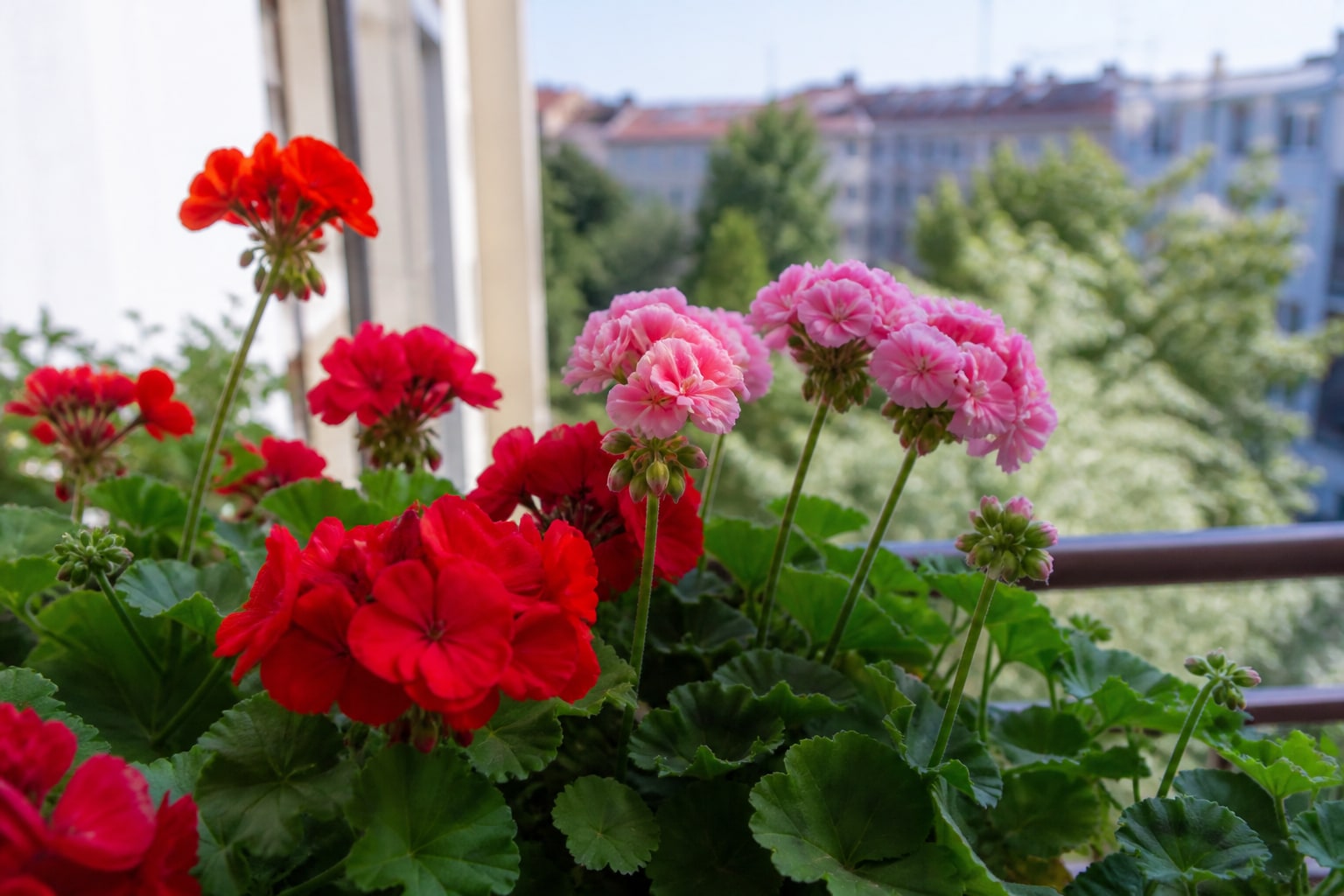
Seasonal care: spring-summer vs autumn-winter
In spring and summer, the geranium is in full growth: frequent watering, fortnightly fertilizing and direct sun are the basics. Watch out for extreme heat: above 30 °C it is advisable to water in the late afternoon or evening as well.
In autumn and winter, reduce watering and fertilizing. If temperatures drop below 5 °C, protect the plant or move the pot to a sheltered place. The Pelargonium hortorum does not tolerate prolonged frost.
Common problems and geranium pests
Yellow leaves
These usually indicate overwatering or a lack of nutrients. Check the substrate first: if it is waterlogged, space out the waterings before thinking about fertilizer.
Overwatering
It causes soft, dark roots and a rotten smell at the base. If you notice this, remove the plant from its pot, cut away the damaged roots with clean tools and repot in dry substrate.
Most common pests
The most common geranium pests are:
- Aphids: green or black colonies on young shoots.
- Whitefly: small white insects that fly up when the plant is moved.
- Red spider mite: appears in dry, hot environments, with speckled leaves.
For light infestations, a strong jet of water or diluted potassium soap is usually enough. If the pest persists, consult a garden centre or a professional specialised in plant protection products.
Propagation from cuttings
Geraniums multiply easily from cuttings, much like other houseplants such as echeveria elegans. Cut a 10-15 cm non-flowering stem, remove the lower leaves and let the cut dry for 24 hours. Plant in light substrate and keep moist without waterlogging. Rooting takes 3 to 4 weeks at room temperature (18-22 °C).
FAQ
How long does a potted geranium last? With good care and frost protection, a Pelargonium hortorum can live for several years, renewing itself with annual pruning.
Why is my geranium not flowering? The most common causes are lack of direct light, excess nitrogen in the fertilizer or no deadheading. Check these three points before anything else.
Can you keep geraniums in the same spot all year round? Yes, in frost-free climates. In cold areas it is advisable to shelter the pot in winter or bring it into a protected space.
Do geraniums absolutely need direct sun? Practically, yes. Without at least 4 hours of direct sun, flowering is drastically reduced, although the plant may survive, just as happens with other intensely flowering species such as the anthurium, which also requires abundant light to produce constant flowers.
What is the difference between geranium and pelargonium? In everyday language, “balcony geranium” almost always refers to species of the genus Pelargonium, not to the botanical genus Geranium, which groups different species used mainly in outdoor gardening and rock gardens.
0 comments · Comment