Nephrolepis exaltata: the Boston fern and the secret of humidity
Complete care guide for the Boston fern (Nephrolepis exaltata): light, watering, humidity and substrate explained with concrete data. Learn why its leaves turn yellow and how to prevent it.
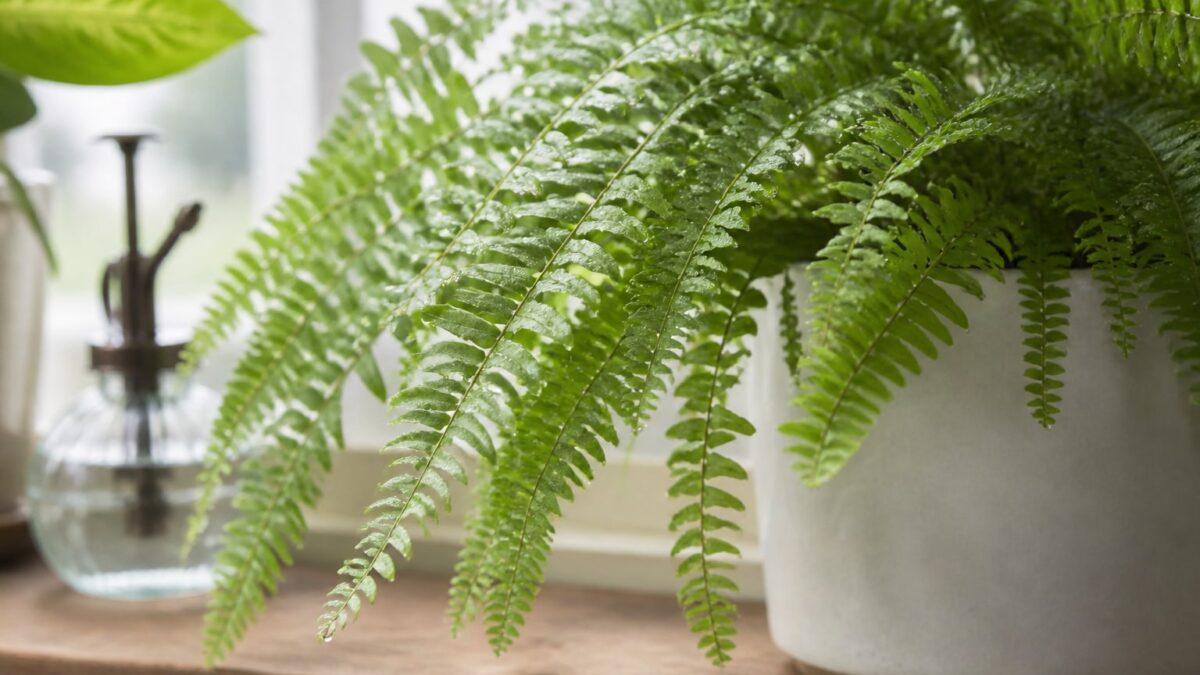
The Boston fern (Nephrolepis exaltata) is one of the most popular houseplants in the world, and also one of the most misunderstood. Many people buy it for its lush, drooping foliage, place it next to any window, and within a few weeks watch the fronds dry out and fall. The problem is almost never light. It is humidity.
This plant comes from humid tropical and subtropical regions of the Americas, Africa and Polynesia, where it grows as an epiphyte or on the ground beneath the forest canopy. That means it is adapted to an environment with high, constant ambient humidity, something very different from the dry air of a home with central heating. Understanding this difference is the real key to helping it thrive.
Quick facts about Nephrolepis exaltata
| Detail | Value |
|---|---|
| Common name | Boston fern, sword fern |
| Scientific name | Nephrolepis exaltata |
| Origin | Tropical America, Africa, Polynesia |
| Light | Bright indirect light, no direct sun |
| Watering | Consistently moist substrate, never waterlogged |
| Ideal ambient humidity | 50-80% |
| Optimal temperature | 16-24 °C |
| Toxicity | Non-toxic to dogs and cats (ASPCA) |
Light, watering and substrate
Light for the Boston fern
The Boston fern wants bright, indirect light, never direct sun. In its natural habitat it grows in the shade of the canopy, so a window facing north or east, or a spot 1-2 metres from a very bright window, usually works well. Direct midday sun scorches the fronds within hours: brown, dry patches appear that do not recover.
If your home is dim, you can supplement with a white-spectrum LED grow light, about 10-12 hours a day. It does not need extreme light levels, but it does need consistency.
Watering and humidity: the critical point
Here lies the true secret of this species. The substrate must be kept constantly moist, never reaching waterlogging. In practice:
- Water when the first 2 cm of substrate begin to feel dry to the touch.
- In spring and summer this is usually every 3-4 days; in heated indoor spaces, every 2-3 days.
- Use room-temperature water, ideally chlorine-free (rainwater or filtered water, or tap water left to stand for 24 hours).
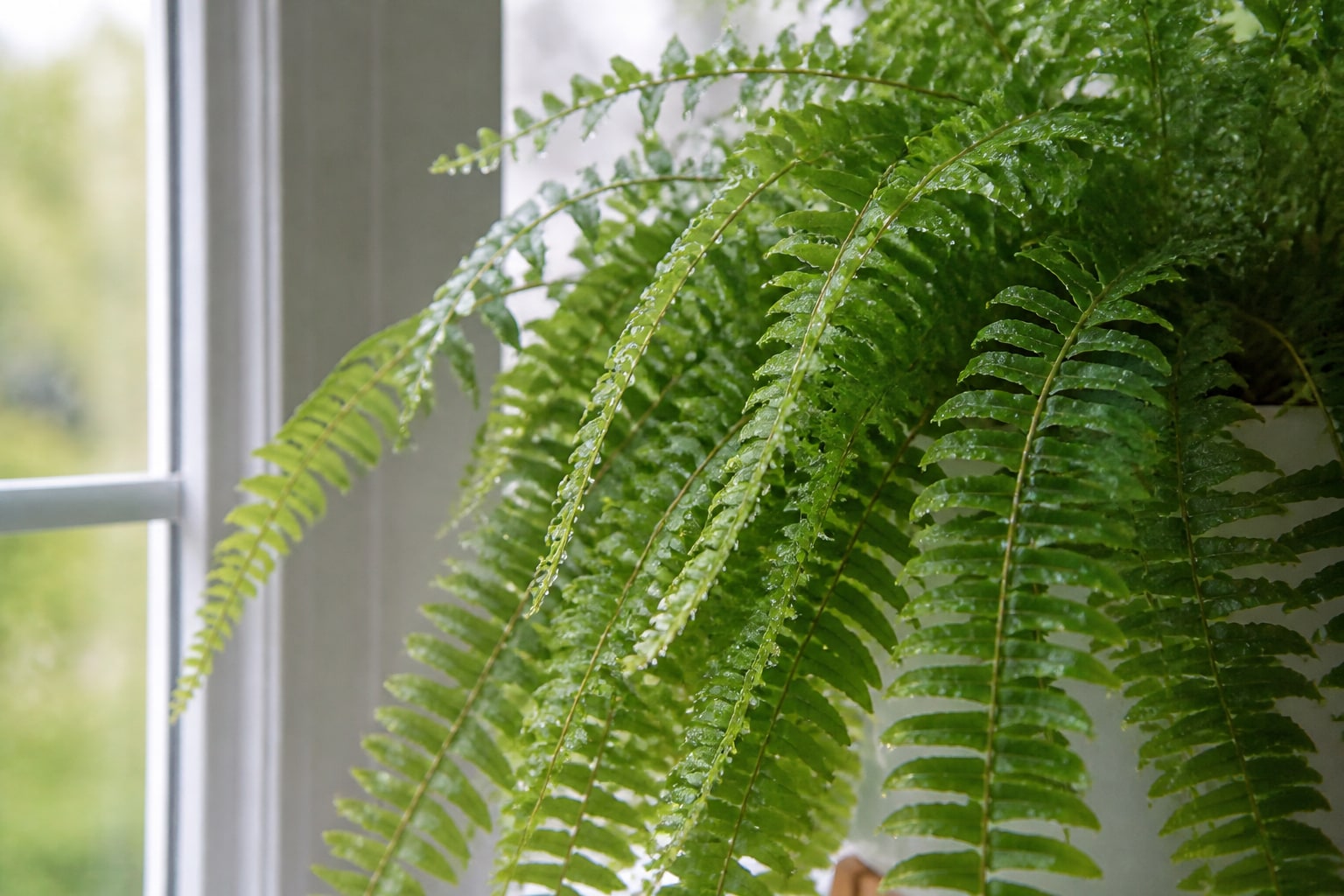
But watering only solves half the problem. The Boston fern needs ambient humidity of 50-80%, well above the 30-40% typical of a living room with heating or air conditioning. To achieve this:
- Place a humidifier nearby, especially in winter.
- Use a tray of pebbles and water under the pot, without the base touching the water.
- Group the plant with other indoor species; together they create a more humid microclimate.
- Misting the fronds helps occasionally, but it does not replace sustained ambient humidity.
Substrate for ferns
It needs a light substrate, rich in organic matter and with good drainage while still retaining moisture. A mix of peat (or coconut fibre as a more sustainable alternative), perlite and compost in similar proportions works well. The ideal pH is around 5.5-6.5, slightly acidic.
Seasonal care
Spring and summer
This is the period of active growth. Feed every 3-4 weeks with a balanced liquid fertiliser diluted to half the recommended dose. Increase watering frequency if you notice the substrate drying out faster due to heat.
Autumn and winter
Growth slows down. Reduce watering slightly, but do not lower your guard on humidity: heating dries the air far more than summer heat does. Stop feeding or reduce it to once a month. Keep the temperature above 13 °C; below that threshold the fronds begin to suffer damage.
Common problems
Yellow leaves on the Boston fern
This is the most frequent question about this plant, and it has several possible causes:
- Air that is too dry: by far the most common cause.
- Irregular watering: letting the substrate dry out completely between waterings.
- Overwatering: waterlogged roots that cannot breathe.
- Exposure to cold draughts or direct heat from a radiator.
The solution almost always starts with checking ambient humidity before looking at watering.
Pests of the Boston fern
The most frequent are the cottony cushion scale and the red spider mite, which appears mainly when the environment is too dry. Check the undersides of the fronds regularly. If you find a pest, isolate the plant and treat it with potassium soap or neem oil, repeating the treatment every 7-10 days until the pest is gone.
Propagation
The simplest method is division of the clump: when repotting, carefully separate sections that have roots and fronds of their own, and plant them in individual pots with the same substrate. Spring is the best time to do this, when the plant has the energy to recover quickly. Spores also form on the undersides of the fronds, but propagating from them is slower and less practical for a hobbyist.
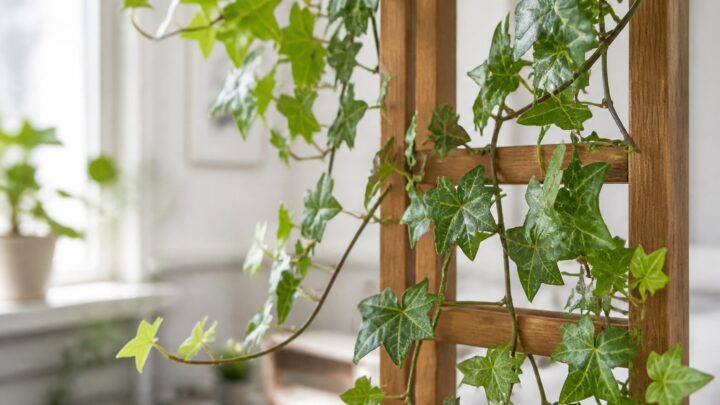
If you already care for other houseplants with similar humidity needs, you may be interested in our guide to ivy for indoors and outdoors, another hardy climber with different but complementary requirements for a green corner.
FAQ
Does the Boston fern purify the air? Studies such as NASA’s Clean Air Study (1989) included it among plants capable of reducing volatile compounds in enclosed spaces, although the real effect in a home is modest compared with regular ventilation.
Why do the Boston fern’s fronds fall off? Almost always because of low ambient humidity or sudden temperature changes. Check the environment first before suspecting pests or disease.
Is it toxic to dogs or cats? No. The ASPCA classifies it as non-toxic, unlike other ornamental ferns that are. Even so, prevent your pet from chewing it excessively; if you notice vomiting or lethargy, consult your veterinarian.
How often should a Boston fern be repotted? Every 1-2 years, when roots start to emerge from the drainage holes of the pot, preferably in spring.
Can it live in a bathroom with a window? It is one of the best places in the house for it, since it usually has higher ambient humidity than the other rooms, provided it receives enough bright indirect light.
As an Amazon Associate, I earn from qualifying purchases.

0 comments · Comment