Budgies: everything you need to know before adopting one
Practical guide for future budgie owners: life expectancy, diet, cage, behaviour and common mistakes. Everything you should consider before adopting.
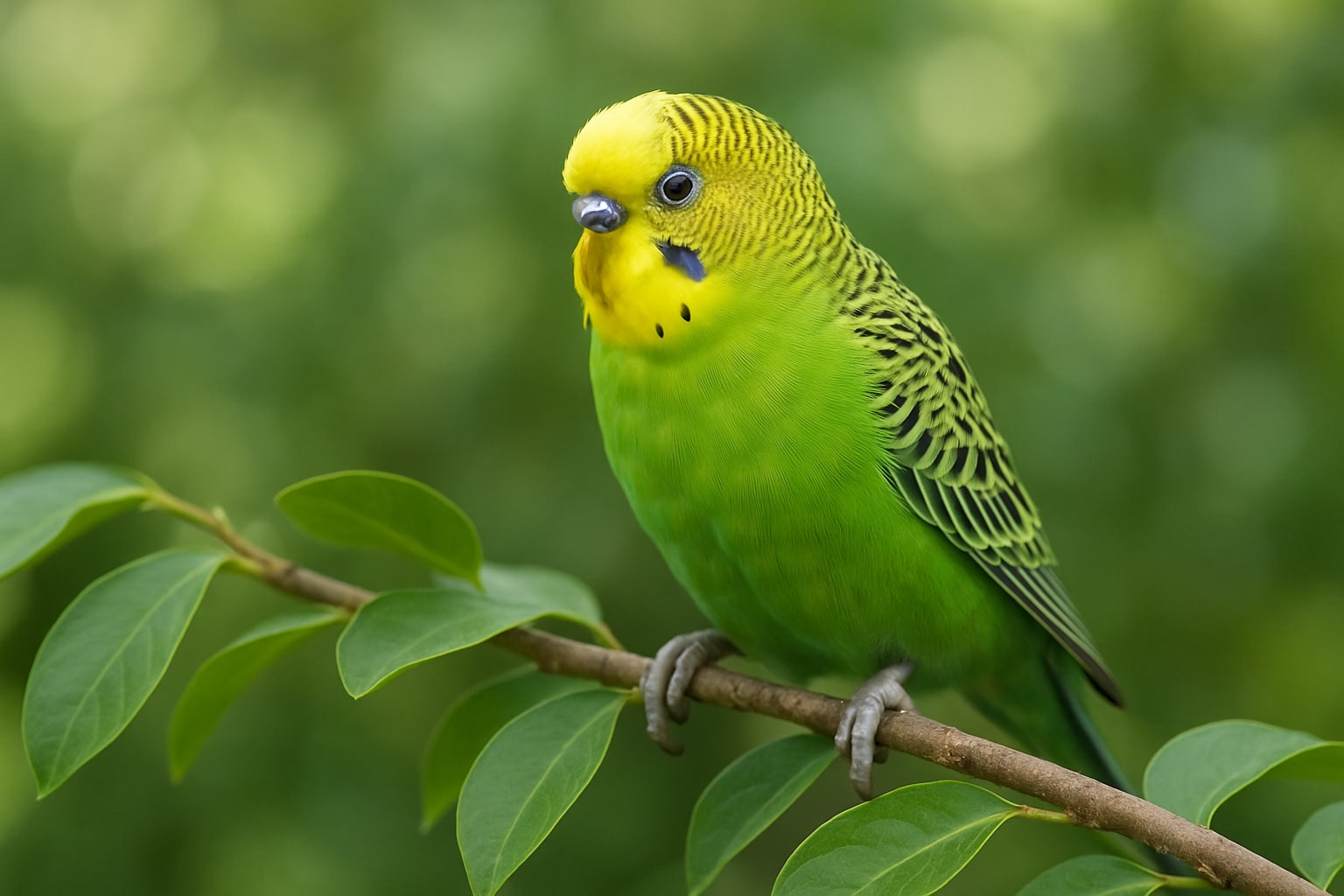
The common budgie (Melopsittacus undulatus) is one of the most popular pets in Spain, and also one of the most misunderstood. Its small size makes people think it demands little, when in fact it is a social, active bird with a life expectancy that surprises many first-time owners.
Before you bring one home, it is worth understanding what it needs, how much it costs to keep, and why it is almost never a good idea to keep just a single bird. This guide gets straight to the point.
Where does the budgie come from?
The budgie is native to the arid and semi-arid areas of Australia, where it forms nomadic flocks of dozens or hundreds of individuals that move around in search of seeds and water. It was scientifically described in 1805 and reached Europe in the mid-19th century, when captive breeding began.
Today, all domestic budgies descend from that wild species. Selective breeding has produced colour varieties (blue, yellow, white, harlequin, lutino) that do not exist in nature, where the plumage is always green with black barring on the head and wings.
How long does a budgie live?
In captivity, when well cared for, a budgie lives between 7 and 10 years, and some individuals exceed 12. In the wild it rarely survives beyond 4-6 years due to predation and drought.
The difference between a budgie that dies at 3 and one that reaches 10 almost always comes down to diet, exercise and the absence of chronic stress.
Is it legal to keep a budgie in Spain?
Yes. The budgie is not included in the Spanish Catalogue of Invasive Alien Species, and it does not require CITES permits to be kept. You can legally adopt or buy one from registered breeders and animal shelters.
That said, Law 7/2023 on the protection of animal rights and welfare requires that adequate housing, feeding and social conditions be guaranteed. Keeping it isolated in a tiny cage may be considered a violation.
One bird or two?
It is better to keep them in a pair or a group. The budgie is a gregarious species: in nature it never lives alone. An isolated bird frequently develops stereotypical behaviours (repetitive pecking at bars, feather plucking, excessive vocalisation) that reflect stress.
Two females may get along worse than a male and a female or two males, but each case depends on the individuals. If you do not want breeding, it is advisable to consult your vet about options to prevent it.
Budgie cage: size and accessories
The cage is their main living space, but it should not be their only one. They need to fly out for several hours a day in a safe room (windows closed, no fans, no other pets loose).
Minimum recommendations for a pair:
- Dimensions: at least 80 × 40 × 50 cm; a horizontal rectangular cage is better than a tall, narrow one.
- Horizontal bars on at least two sides, for climbing.
- Natural wooden perches of different thicknesses (2 or 3), never only plastic.
- Food bowl, water dispenser, a shallow bath and 2-3 rotating toys.
- Location in a bright area but away from draughts and permanent direct sunlight.
Avoid round cages: they disorient the bird and do not allow flight in a straight line.
Budgie feeding: what to eat and what to avoid
The traditional base is a budgie seed mix (millet, canary grass seed, oats), but a diet of seed alone promotes obesity and fatty liver. The recommended approach is to combine:
- 50-60 % seed mix or, better, a specific extruded pellet food.
- 30-40 % fresh vegetables: chard, lamb’s lettuce, broccoli, pepper, grated carrot, cucumber.
- 5-10 % fruit: apple (no pips), pear, blueberries, a little banana.
- Cuttlebone always available as a source of calcium.
Approximate amount: 1.5-2 teaspoons of seed per day per bird, plus the portion of fresh vegetables.
Forbidden: avocado, chocolate, onion, garlic, coffee, alcohol, apple pips and any salty or sugary food.
Budgie behaviour: what is normal and what is not
A healthy budgie is active, vocalises often, chews on toys and perches, and sleeps for 10-12 hours in darkness. Mutual preening between members of a pair is common.
Warning signs: feathers fluffed up for hours, half-closed eyes, laboured breathing with the tail bobbing, prolonged silence, diarrhoea, changes in water intake. In any of these cases, see a vet who specialises in exotic birds.
Budgie health: common diseases
The most frequent conditions seen in clinics are:
- Beak and leg mites (Knemidocoptes): whitish crusts.
- Psittacosis (Chlamydia psittaci): a zoonosis, treatable but contagious.
- Megabacteriosis (Macrorhabdus ornithogaster): weight loss despite eating.
- Tumours (common in birds over 5 years old).
- Fatty liver from an exclusively seed-based diet.
An annual veterinary check-up and a 30-day quarantine when introducing a new bird prevent most problems.
The real cost of keeping a budgie
Running the numbers before adopting avoids surprises. Approximate annual estimate for a pair:
- Acquisition: €20-40 per bird from a breeder; adoption from a shelter, donation varies.
- Cage and initial accessories: €100-200.
- Food: €15-25 per month.
- Exotic-animal vet (annual check-up): €40-80; emergencies, more.
Realistic budget: between €400 and €700 in the first year, and around €300-400 in following years without medical surprises.
Frequently asked questions
Can it learn to talk? Some males learn words or short phrases by imitation, especially if they live alone, but this should not be the reason to adopt one.
Does it get along with other pets? It is not advisable to let it loose with dogs or cats. Even without intending harm, a single swipe of a paw can be fatal.
Can I leave it loose around the house all day? It is not safe: cables, windows, toxic plants, pots on the stove. Supervised flight in a prepared room is best.
How long does it take to get used to me? Anywhere from weeks to months. Trust is earned through routine, a soft voice and short interaction sessions, never by forcing contact.