Salvia officinalis: sage, the aromatic herb that is also ornamental
Discover how to grow Salvia officinalis at home, its basic care, and why this Mediterranean aromatic combines cooking, medicinal tradition and ornamental beauty all year round.
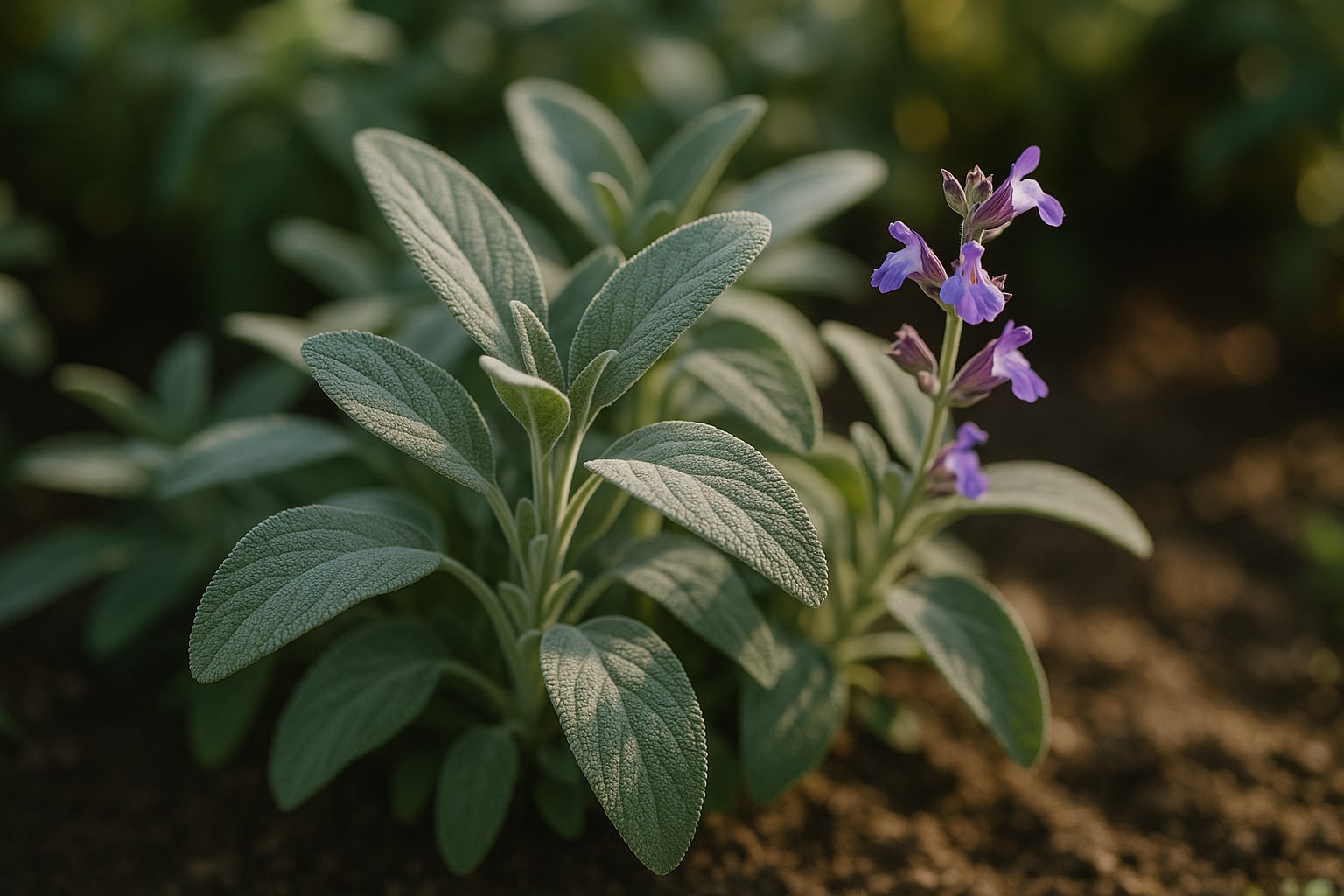
Common sage (Salvia officinalis) is one of those plants that solve several problems at once. It flavours stews, decorates a sunny corner of the balcony and withstands dry summers without complaint. It has been grown for centuries in monastery gardens, apothecaries and Mediterranean kitchens, and today it remains a safe choice whether you are starting out with aromatic herbs or looking for a low-maintenance ornamental plant.
Its name says it all: officinalis refers to plants used in the “officinae”, the workshops where medieval apothecaries prepared remedies. That is why sage carries a huge medicinal reputation, not always well substantiated, but with a real basis in its chemical composition.
Botanical profile: what Salvia officinalis is
Common sage belongs to the Lamiaceae family, the same as rosemary, thyme, mint and basil. It is a semi-woody perennial, meaning it has a lignified stem base and new herbaceous shoots each season. It reaches 40 to 70 cm in height and a similar spread once well established.
Its leaves are unmistakable: oval, wrinkled, greyish-green and covered in a fine down that makes them look velvety. When rubbed they release an intense, camphor-like, slightly bitter aroma. In spring and early summer it produces flower spikes with tubular bluish-violet flowers, very attractive to bees and bumblebees.
Origin and ornamental varieties
It is native to the Mediterranean basin, especially rocky, limestone areas of the Balkans and southern Europe. It is perfectly adapted to climates with hot, dry summers and mild winters, although it tolerates moderate frosts down to -10 °C if the soil drains well.
Besides the type species, there are very showy cultivated varieties:
- ‘Purpurascens’: purple leaves, ideal for contrast in borders.
- ‘Tricolor’: green leaves with cream edges and pinkish tones.
- ‘Icterina’: variegated in green and yellow, very bright.
- ‘Berggarten’: broader, more aromatic leaves, barely flowers.
All share the same care as the base species and function as ornamental plants in Mediterranean gardens, xeriscapes or low borders.
Light, water and substrate
Sage is demanding in one respect only: it needs direct sun. At least 6 hours a day to develop flavour, aroma and a compact habit. In less light it becomes leggy, loses aromatic intensity and becomes prone to fungal disease.
As for watering, it is better to err on the side of stinginess. Water only when the top 2-3 cm of substrate are dry. In summer this usually means 1-2 waterings a week in pots and practically none in the ground once established. In winter, every 10-15 days is enough.
The ideal substrate is loose, mineral and well drained. A mix that works:
- 50% universal potting mix
- 30% coarse sand or perlite
- 20% mature compost
The optimal pH is between 6.0 and 7.5, slightly alkaline. If your irrigation water is very limy, sage will appreciate it more than other aromatic herbs. As with Mediterranean rosemary, the number one enemy is not drought but waterlogging.
Seasonal care
Spring and summer are the growing season. Add compost in early spring and pinch the tips to encourage branching. If it flowers and you are not interested in seed, cut off the spent spikes: the plant will direct more energy into leaves.
Autumn and winter are the resting period. Reduce watering drastically, do not fertilise and protect from excess moisture. In areas with hard frosts, a mulch of gravel or bark around the base helps. Every 3-4 years a rejuvenation pruning is advisable in late winter, cutting back a third of the clump to prevent it from becoming overly woody and hollow inside.
Common problems
- Yellow, falling leaves: almost always overwatering or compacted substrate. Check drainage.
- White, powdery spots: powdery mildew, favoured by humidity and poor ventilation. Improve airflow, thin out branches and remove affected leaves.
- Bare, woody base: lack of pruning. Rejuvenate by cutting low, back to wood with green shoots.
- Aphids on tender shoots: remove with a jet of water or diluted potassium soap.
- Weak aroma: shade, excess nitrogen or watering. Flavourful sage is the kind that is allowed to go a little thirsty.
How to propagate sage
The two most reliable methods are cuttings and division. Seeds work but are slow, and ornamental varieties do not come true.
- Semi-ripe stem cuttings: in spring or early autumn. Cut 8-10 cm sprigs, remove the lower leaves and plant in moist sandy substrate. They root in 3-4 weeks.
- Layering: bend a low branch down to the soil, partially bury it and wait for it to produce roots. Simple and with a high success rate.
- Division of the clump: on old plants, in late winter.
Culinary uses and properties
In cooking, sage accompanies fatty meats (pork, lamb, duck), stuffings, flavoured butters and the classic Italian pasta burro e salvia. 2-3 leaves per dish are enough: it is a powerful herb that easily dominates.
Its properties are attributed to its essential oils (thujone, cineole, camphor) and phenolic compounds such as rosmarinic acid. It is traditionally used in digestive infusions and as a mouthwash for its astringent effect. However, it is not harmless. Thujone is neurotoxic in high doses, and prolonged or concentrated consumption is discouraged during pregnancy and breastfeeding. For any therapeutic use, consult a healthcare professional.
Frequently asked questions
How long does a sage plant live? Between 4 and 7 years in good conditions. From the fourth year onwards it loses vigour and it is advisable to replace it with your own cuttings.
Can sage be grown indoors? It is possible, but difficult. It needs plenty of direct light. Next to a south-facing window it can work; indoors without sun, it languishes.
Is sage toxic to dogs and cats? In small amounts it usually causes no problems, but concentrated essential oil can be irritating. If your pet frequently chews the plant or shows symptoms, consult the veterinarian.
Can I plant it alongside other aromatic herbs? Yes, it shares requirements with rosemary, thyme and lavender. Avoid planting it with more moisture-loving herbs such as spearmint, which need very different watering.
When are the leaves harvested? At any time of year, but maximum aroma is concentrated just before flowering, late in the morning, once the dew has evaporated.